Top Automated Mold Solutions for Efficient Manufacturing?
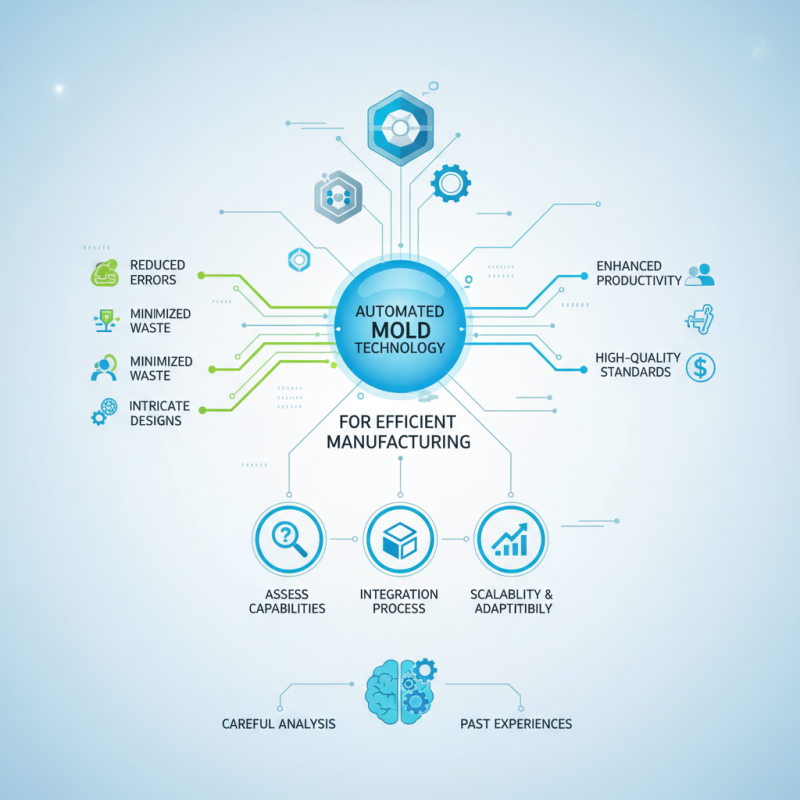
Automated Mold technology has transformed manufacturing. It brings efficiency to production lines, reducing errors and minimizing waste. Automated Mold solutions enable manufacturers to create intricate designs with precision.
With the rise of automation, industries are embracing these advanced solutions. They enhance productivity while maintaining high-quality standards. However, some organizations may struggle with the integration process. It's essential to assess capabilities and resources.
Exploring top Automated Mold solutions can lead to better decision-making. Manufacturers should consider scalability, adaptability, and support services. Identifying the right approach requires careful analysis and reflection on past experiences.
Top Automated Mold Solutions for Efficient Manufacturing
In today’s fast-paced manufacturing landscape, automated mold solutions are transforming production efficiency. According to a recent report by the International Data Corporation, companies utilizing automated solutions can see productivity increases of up to 30%. These molds reduce human error and streamline processes. However, many facilities still rely on manual methods, raising questions about their competitiveness.
Adopting automation requires an initial investment, which some manufacturers hesitate to make. The average ROI can take three to five years, but the long-term benefits often outweigh the costs. Data from the Association for Manufacturing Technology shows that automated molds can decrease production times by 20%. This leads to quicker time-to-market for products, but transitioning to automation isn’t always smooth.
There are challenges in integrating these advanced systems. Employee training is essential, as workers need to adapt to new technologies. A survey revealed that 40% of workers felt unprepared for automation shifts. Frequent updates and maintenance are also necessary to maintain efficiency, which can disrupt production schedules. The journey toward full automation demands careful planning and a willingness to address these complexities.
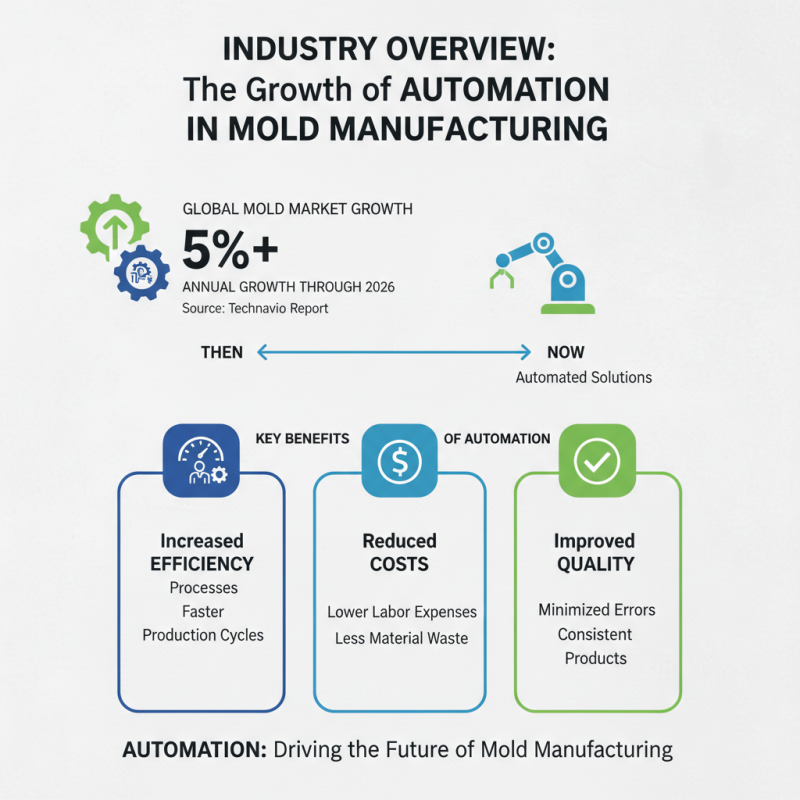
Industry Overview: The Growth of Automation in Mold Manufacturing
The mold manufacturing industry is experiencing rapid growth due to increased automation. According to a report by Technavio, the global mold market is set to grow by over 5% annually through 2026. Automation technology enhances production efficiency, reduces labor costs, and minimizes human error. As manufacturers invest in automated mold solutions, they are finding ways to streamline operations and improve product quality.
Implementing automated systems can significantly boost productivity. For instance, a study by McKinsey shows that automation can increase production output by 20% to 50%. Advanced robotics and AI are becoming integral tools in modern mold production. However, transitioning to these technologies can require substantial upfront investment and workforce retraining. Many businesses are still evaluating the best approaches to automation.
Tips: Start by assessing the specific needs of your operation. Identify tasks that can benefit from automation without overwhelming your current workforce. Evaluate the return on investment for new technologies. Incremental changes can lead to significant improvements over time. Emphasizing training will ensure your team adapts smoothly to these innovations, fostering a culture open to change in your organization.
Key Technologies Driving Automation in Mold Production
Automation is transforming mold production. Advanced technologies are enhancing efficiency, reducing costs, and improving precision. Robotics plays a key role in automating repetitive tasks. Robots can handle material loading, unloading, and even intricate movements, minimizing human error. They streamline processes and free up workers for more complex tasks.
Another significant technology is artificial intelligence (AI). AI algorithms analyze production data in real-time. They can predict maintenance needs and optimize workflows. Machine learning models identify patterns and enhance decision-making. This leads to fewer disruptions and improved output quality.
However, implementing these technologies is not without challenges. Training staff to work alongside automated systems requires time and resources. The initial investment can be daunting for smaller operations. Businesses must weigh costs against potential gains. Continuous evaluation and adaptation are essential for effective automation.
Top Automated Mold Solutions for Efficient Manufacturing
| Technology |
Description |
Key Benefits |
Industry Applications |
| Robotic Automation |
Integration of robotic arms for handling and finishing molds. |
Increased speed, precision, and labor cost reduction. |
Automotive, Aerospace, Consumer Goods |
| CNC Machining |
Computer numerical control for precise mold machining. |
High accuracy and repeatability in mold production. |
Medical Devices, Electronics, Industrial Components |
| 3D Printing |
Additive manufacturing for quick mold prototype creation. |
Rapid prototyping and reduced material waste. |
Aerospace, Custom Molds, Jewelry |
| Digital Twin Technology |
Virtual representation of molds for better monitoring. |
Predictive maintenance and improved efficiency. |
Manufacturing, Logistics, Automation |
| AI and Machine Learning |
Data analysis for optimizing mold designs and production. |
Enhanced design accuracy and reduced time to market. |
Consumer Electronics, Automotive, Manufacturing |
Comparative Analysis of Automated Molding Techniques and Their Benefits
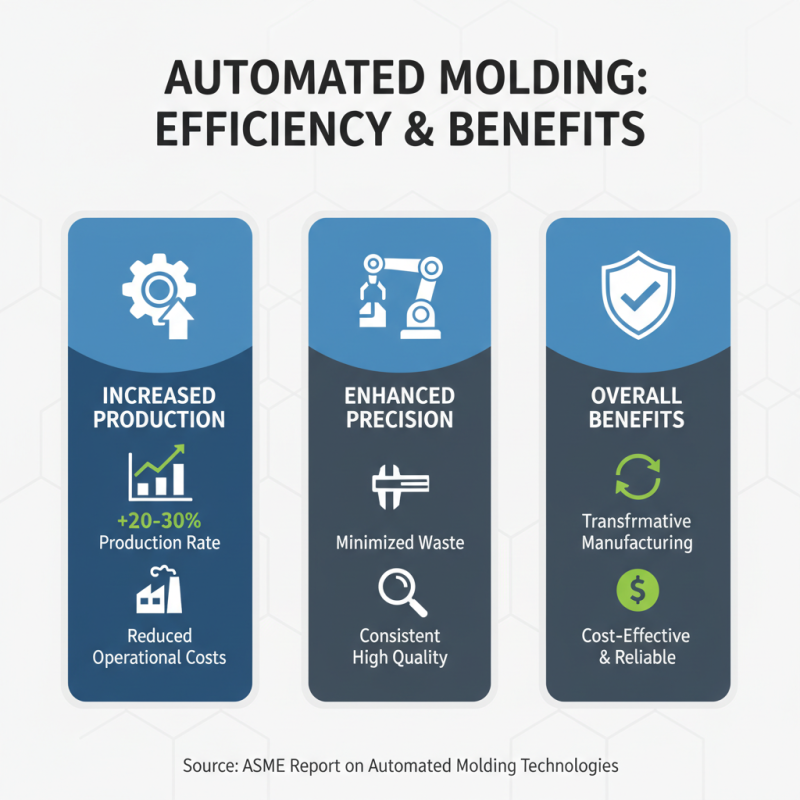
Automated molding techniques have rapidly transformed manufacturing efficiency. A recent report by the American Society of Mechanical Engineers highlights that automated molding can increase production rates by approximately 20-30%. This leap allows companies to reduce operational costs while maintaining high-quality outputs. The integration of robotics in molding processes leads to greater precision, minimizing waste and ensuring consistent part quality.
However, challenges remain. Not all automated solutions are suited for every application. For instance, complex molds may require skilled oversight to ensure optimal performance. Additionally, initial capital investment can be a barrier for smaller manufacturers. The potential return on investment is clear, but careful planning is needed to harness the full benefits of automation.
The comparative analysis of various automated molding techniques reveals both advantages and limitations. Techniques like injection molding and blow molding each have distinct benefits, such as speed and flexibility. The choice depends on production volume and material requirements. Innovative emerging technologies add complexity to the decision-making process. As the industry evolves, manufacturers must evaluate their specific needs against the available technologies to make informed decisions.
Case Studies: Successful Implementations of Automated Mold Solutions
Automated mold solutions have transformed manufacturing processes across various industries. A notable case study involves a mid-sized automotive parts manufacturer that faced production delays due to labor shortages. By implementing automated mold systems, the company achieved a 30% increase in production speed. The machines reduced manual handling and improved precision. Consequently, their overall production costs decreased significantly.
Another compelling example comes from a consumer goods company that struggled with product consistency. After employing automated mold technology, they reported a 25% reduction in defects. The mold systems provided real-time monitoring, ensuring quality control. However, the transition wasn't seamless. Employees needed retraining, and initial resistance was evident. This highlights the importance of change management during such implementations. Companies must recognize that technology alone does not guarantee success; skilled operators play a crucial role.
Both examples illustrate the effectiveness of automated solutions. Yet, they also emphasize the necessity for careful planning and workforce adaptation. It's crucial to maintain communication between management and staff. This fosters a collaborative atmosphere during such transitions, enhancing both technology and human expertise.
Conclusion
The article "Top Automated Mold Solutions for Efficient Manufacturing" explores the transformative impact of automation on the mold manufacturing industry. It highlights the significant growth of automation technologies, which are revolutionizing the production process by enhancing efficiency and precision. Key technologies such as robotics, AI, and IoT are central to this evolution, driving improvements in automated molding techniques and offering various benefits including reduced cycle times and operational costs.
Through comparative analysis and case studies, the article illustrates successful implementations of automated mold solutions that demonstrate tangible advantages for manufacturers. Looking towards the future, the piece discusses emerging trends that are likely to shape automated mold manufacturing, emphasizing how continued innovation will further influence industry practices and productivity. Overall, the adoption of automated mold solutions is positioned as a critical factor for competitive success in the manufacturing sector.