What is Automation Equipment Molds and How Do They Impact Manufacturing?
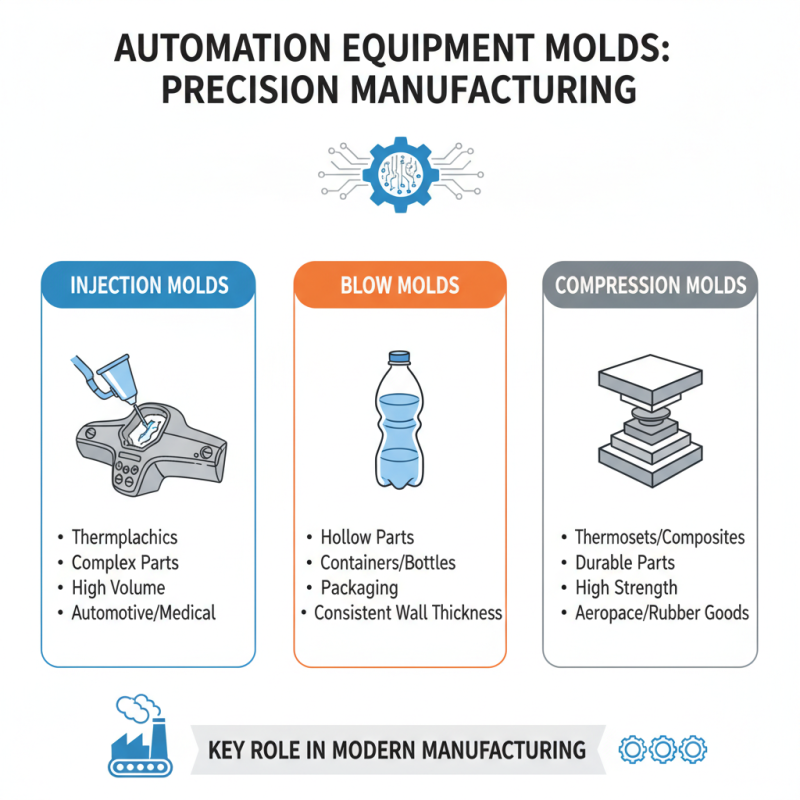
Automation Equipment Molds play a crucial role in modern manufacturing. These molds are essential components that help streamline production processes. They enable factories to produce parts with high precision and speed. By automating certain steps, businesses can significantly reduce labor costs.
The use of Automation Equipment Molds can lead to increased efficiency. However, not every mold design is perfect. Flaws can arise in the process, resulting in defects. Manufacturers must continuously evaluate and refine their molds. This ongoing assessment is key to improving output quality.
Investing in the right molds can transform a production line. Yet, selecting the wrong design may lead to wasted resources. It’s vital for manufacturers to weigh the benefits against potential drawbacks. Automation Equipment Molds offer great promise but require thoughtful implementation.
What Are Automation Equipment Molds?
Automation equipment molds play a crucial role in modern manufacturing. These molds are used to shape materials during the production process. They can create consistent parts quickly and efficiently. This efficiency reduces waste and lowers production costs. According to a report by the international manufacturing organization, automation can increase productivity by up to 30%.
Molds used in automation are often made from durable materials. Steel and aluminum are popular choices. These materials provide longevity and precision. However, quality control is essential. Imperfections in molds can lead to defects in products. This can result in costly downtime for manufacturers. Companies should prioritize regular maintenance and inspections.
**Tips:** Always evaluate the material choice for molds. Think about the long-term costs. A small investment in quality might save significant amounts in repairs.
Additionally, training staff on mold handling is vital. Automation can streamline processes, but human touch is still essential. Neglecting this aspect can lead to errors. In the fast-paced world of manufacturing, a moment's lapse can be expensive. Automation equipment molds are not just tools; they are foundational components that shape the future of manufacturing.
Impact of Automation Equipment Molds on Manufacturing Efficiency
The Role of Automation Equipment Molds in Production Efficiency
Automation equipment molds play a crucial role in enhancing production efficiency. They streamline various manufacturing processes and reduce human error. According to a recent industry report, companies utilizing automated manufacturing solutions have seen a 30% increase in efficiency. This improvement stems from the precision and consistency that automation provides.
Moreover, automation molds can significantly reduce production costs. A study indicated that implementing automation could lower material waste by up to 25%. This not only optimizes resources but also minimizes the overall environmental impact. However, adopting such technology isn’t without challenges. The initial investment can be substantial, and the learning curve may pose difficulties for staff.
The effectiveness of automation molds also relies heavily on regular maintenance. Failure to maintain these systems can lead to unexpected downtimes. For instance, a factory faced a 15% production loss due to mold malfunction. Such incidents highlight the need for ongoing training and support. Ensuring that staff are equipped to handle these technologies is vital for maximizing their benefits.
What is Automation Equipment Molds and How Do They Impact Manufacturing? - The Role of Automation Equipment Molds in Production Efficiency
| Dimension |
Data |
| Average Production Time (hours) |
25 |
| Setup Reduction Time (hours) |
5 |
| Defect Rate (%) |
2 |
| Production Cost Reduction (%) |
15 |
| Energy Consumption (kWh) |
120 |
| Employee Efficiency Increase (%) |
20 |
| Mold Life Span (cycles) |
500,000 |
| Return on Investment (ROI) (%) |
200 |
Benefits of Using Automation Equipment Molds in Manufacturing Processes
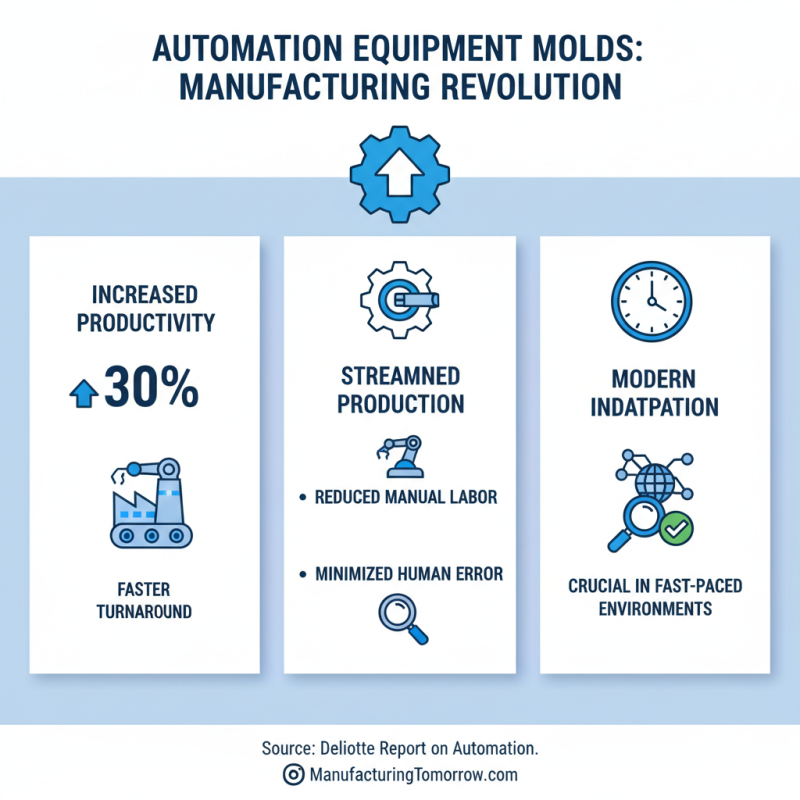
In recent years, the adoption of automation equipment molds has transformed manufacturing processes significantly. According to a report by Deloitte, manufacturers that implement automation can increase productivity by up to 30%. These molds streamline production, resulting in faster turnaround times. By reducing manual labor, companies minimize human error. This shift is crucial in today’s fast-paced industrial environment.
Automation molds enhance precision in manufacturing. A study from McKinsey shows that automation reduces defects by nearly 50%. This improvement is vital for industries requiring high-quality standards. However, transitioning to automated systems can be challenging. Staff training and integration are often overlooked. Some companies may also struggle with the initial costs. These hurdles can lead to reduced morale among teams.
Moreover, while automation molds boost efficiency, they can create dependence on technology. A reliance on machines might lead to skill gaps in the workforce. A balance is needed between automation and human touch. Continuous evaluation of these systems is essential to avoid stagnation. Companies must reflect on the broader implications of automation molds. What does it mean for the future workforce? These questions remain crucial in understanding the full impact of automation in manufacturing.
Future Trends in Automation Equipment Molds and Manufacturing Integration
The integration of automation equipment molds in manufacturing is evolving rapidly. As industries adopt smarter technologies, molds are becoming more versatile. They not only produce but also adapt to changing needs. This adaptability introduces a new level of efficiency. Advanced molds can now collect data, leading to informed decisions and reduced waste.
Tips: Ensure your team is well-trained in this technology. Lack of understanding can lead to mistakes. Consider investing in ongoing training.
Future trends show an increase in custom molds. Companies are moving towards personalized products. This shift requires molds that can easily change. Flexibility is key to meeting diverse customer demands.
Tips: Analyze your production flow. Identify opportunities for mold upgrades and innovations. Small changes can lead to significant improvements.
As automation molds advance, challenges appear. Not every manufacturer can keep up with the pace of change. Striking a balance between new technology and current resources is crucial. Continuous assessment will be vital for long-term success.