7 Best Air Conditioning Vent Mold Removal Products
Air Conditioning Vent Mold can look like a few dark flecks around a grille, yet the visible marks may point to lingering moisture, dust, or condensation. A cleaner can remove surface residue, but it cannot correct a damp duct or a poorly insulated vent. That distinction matters. Harvard healthy-buildings researcher Dr. Joseph Allen has described buildings as “the next frontier in public health.” His broader point is relevant here: indoor spaces and their upkeep can affect people’s well-being.
This guide compares seven products for cleaning accessible vent surfaces, including sprays and other purpose-made options. It considers label directions, suitable materials, ease of application, and whether a product leaves residue near the airflow. A sharp chemical smell is not proof of better cleaning. Nor does a spotless grille prove the moisture source is gone. Small details count: a dusty return vent, a cold metal register, or a damp cloth left in a closed room can change the result.
Use products only as directed, and never mix cleaners. Keep occupants away during cleaning when the label recommends it. If mold covers a large area, returns quickly, or appears inside ductwork, seek qualified assessment rather than spraying blindly. That can feel like overkill. Sometimes it is not. The best choice depends on the surface, the extent of growth, and the source of moisture. No product can promise a lasting fix without those details.
Understanding Mold Growth in Air Conditioning Vents
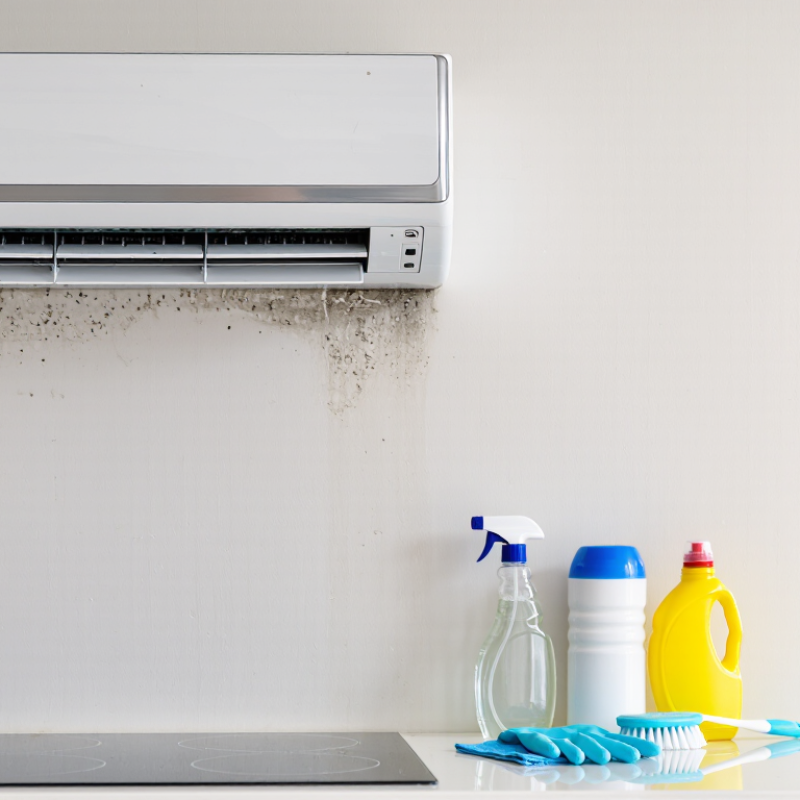
Air-conditioning vent mold usually begins with moisture, not a dirty-looking grille. Cold supply air can chill metal, allowing humid room air to condense around the vent. Dust, lint, and skin flakes provide material for mold to grow on. A musty smell near one register matters, but it does not prove mold is inside the duct. Sometimes the source is a wet drain pan, clogged condensate line, or damp insulation nearby. That is the clue. Not a diagnosis.
The U.S. Environmental Protection Agency’s Mold Remediation in Schools and Commercial Buildings guidance says mold can begin growing within 24 to 48 hours after water exposure. A small leak may therefore leave dark specks after a humid weekend. The National Academies’ 2004 report, Damp Indoor Spaces and Health, found sufficient evidence linking indoor dampness and mold with respiratory symptoms, including cough and wheeze. These findings point to moisture as a key factor, not just surface dirt.
Look for repeated condensation, water stains, peeling paint, or dust collecting in a fuzzy line around the louvers. Check the filter and condensate drainage, and keep indoor humidity below 60 percent; the EPA suggests 30 to 50 percent when practical. It is easy to overread a stain. Surface cleaning may improve appearance, yet persistent dampness can bring the growth back.
7 Best Air Conditioning Vent Mold Removal Products - Understanding Mold Growth in Air Conditioning Vents
Mold grows where moisture and suitable nutrients are available. Fix the moisture source first; cleaning alone may not prevent regrowth. These product types have different uses, and no cleaner should be applied inside an HVAC system unless its label and the equipment manufacturer specifically allow it.
| No. |
Product type |
Best suited for |
Role and practical use |
Important limitations |
| 1 |
Detergent-based cleaner |
Removable, washable vent grilles with light surface soil |
Use with water and a cloth or soft brush to physically remove dirt and surface growth; rinse if directed and dry the grille completely before reinstalling. |
Cleaning does not correct leaks or condensation. Do not soak electrical parts or apply liquid to ducts or equipment. |
| 2 |
EPA-registered mold and mildew cleaner |
Hard, nonporous surfaces explicitly listed on the product label |
May be appropriate for a removable grille or other permitted surface when used exactly as directed, including label instructions for contact time and ventilation. |
Check that the label permits the specific surface and use. Registration does not mean a product is suitable for air ducts, coils, or every HVAC component. |
| 3 |
Hydrogen-peroxide-based surface cleaner |
Some compatible, washable surfaces, subject to the product label |
Can help clean certain surfaces when applied according to the manufacturer’s directions; test an inconspicuous area if the label recommends it. |
Formulations and permitted uses vary. It may discolor or damage some materials; never mix it with other cleaners. |
| 4 |
HVAC evaporator-coil cleaner |
Accessible air-conditioning coils, only when the equipment manufacturer permits the selected cleaner |
Designed to remove soil from coils and support routine equipment maintenance; follow the coil and cleaner instructions for application and rinsing. |
It is not automatically a mold remediation product. Incorrect chemicals or application can damage coils, create residues, or affect system operation. |
| 5 |
HEPA-filter vacuum |
Dry dust and loose debris on accessible, dry surfaces |
Captures fine particles during careful cleaning of a removable grille or nearby area; use a suitable attachment and avoid spreading dust. |
Vacuuming does not kill or remove growth embedded in materials. Do not vacuum wet or visibly moldy material with an ordinary household vacuum. |
| 6 |
HVAC condensate drain or pan maintenance cleaner |
Compatible condensate pans and drain lines, as specified by the product and equipment instructions |
May help maintain a drain system and reduce buildup that can contribute to standing water when used as directed. |
It does not remove mold from vents or ducts and cannot replace clearing a blocked drain or repairing a drainage problem. |
| 7 |
Dehumidifier with a humidity monitor |
Rooms or areas that remain overly humid |
Helps control indoor moisture, an important step in reducing conditions that support mold growth. Monitor humidity and address leaks or condensation as well. |
Prevents moisture-related conditions; it does not clean existing mold. Follow the device instructions and empty or drain it as directed. |
Factors to Consider When Choosing a Mold Removal Product
Choose a mold removal product that matches the vent material. Some vents are painted metal; others are plastic, which can discolor or soften with harsh ingredients. Check the label for approved surfaces and follow its contact time. A product meant for hard surfaces may not be suitable for porous insulation or deep ductwork. Less odor matters. Strong fragrance can linger when the system runs.
Consider how the product is applied. A damp cloth or controlled spray can limit droplets compared with a wide mist. Turn off the air conditioner before cleaning an accessible vent, and avoid spraying into ducts, coils, or electrical parts unless the directions specifically allow it. Wear the protective gear listed on the label and keep the room ventilated. Never combine cleaning products. It is easy to overvalue a “fast-acting” claim; surface compatibility and clear instructions are more useful.
A cleaner will not correct the moisture that allowed mold to grow. Look for condensation, a clogged drain, or a damp filter area, and address the source. If growth returns quickly, covers a broad area, or appears inside equipment, stop at the visible vent and seek qualified HVAC or mold-remediation advice. That may feel excessive for a small spot, but repeated cleaning without finding the cause can waste time.
Types of Products Used to Clean HVAC Vents
Types of Products Used to Clean HVAC Vents
Useful vent-cleaning supplies include a HEPA-filter vacuum, a soft nylon brush, microfiber cloths, and mild detergent. The vacuum captures loose dust instead of simply stirring it into the room. A brush can loosen debris around grille slats, while a damp cloth lifts residue from washable, hard surfaces. Keep the cloth damp, not dripping.
For visible growth, choose a disinfectant only if its label specifically permits use on the surface and in the HVAC context. Follow its directions; stronger chemicals are not automatically better. Coil cleaners are designed for equipment coils, not ordinary vent covers, and are best handled by a trained technician. Replace a dirty HVAC filter with the correct size. A filter helps limit airborne particles, but it does not remove mold already growing inside ductwork. Porous insulation may need professional assessment, since wiping can miss growth beneath the surface.
Tips: Turn the system off before cleaning. Wear gloves and eye protection. Never mix cleaning products. If mold returns, or you notice a musty smell deep in the system, look for moisture and get qualified help. A quick wipe may not solve the cause.
How to Use Mold Removal Products Safely and Effectively
Mold near an air-conditioning vent often signals a moisture problem, not merely a dirty grille. Switch off the system before cleaning, then inspect the area with a flashlight. Look for condensation, a clogged drain, or damp insulation; cleaning alone will not correct these causes. Wear gloves, eye protection, and a well-fitting mask. Open a window if practical, and keep children and pets away. Read the product label carefully.
Choose a remover labeled for the specific surface, such as a hard, washable vent cover. Test it on a small, hidden spot first, since finishes can discolor. Apply the cleaner to a cloth when possible, rather than spraying near the duct opening. Do not put chemicals inside ductwork or the air handler unless the instructions clearly allow that use. Never mix cleaners; some combinations can release dangerous fumes. Follow the stated contact time, then wipe or rinse as directed and let the surface dry fully before restarting the system.
If mold covers a large area, returns quickly, or appears on insulation or other porous material, stop and contact a qualified indoor-air or HVAC professional. Porous materials may need removal, not surface treatment. Take a photo and note where moisture appears; those details can help identify the source. It is tempting to treat the visible stain as the whole problem. That is easy to miss. Cleaning can improve the vent’s appearance, but it cannot replace fixing a leak or persistent condensation.
7 Best Air Conditioning Vent Mold Removal Products — How to Use Mold Removal Products Safely and Effectively
For mold prevention, the U.S. EPA recommends keeping indoor relative humidity below 60%, ideally between 30% and 50%. Cleaning mold from a vent does not address the moisture causing it; correct leaks or condensation, and follow the cleaner’s label and ventilation instructions.
Source: U.S. Environmental Protection Agency (EPA), mold and moisture guidance.
Comparing Seven Air Conditioning Vent Mold Removal Products
Comparing seven air-conditioning vent mold removal products means judging more than their cleaning claims. Mild detergent suits washable grille surfaces and light soil, but it cannot correct moisture inside a duct. Hydrogen-peroxide cleaners may help on compatible, accessible surfaces; test a hidden spot first. EPA-registered antimicrobial products require label-compliant use, and EPA does not recommend routine biocide use for mold cleanup. HVAC coil cleaners are designed for coils, not every vent material. A HEPA vacuum can capture loose debris when used carefully, while microfiber cloths lift residue from removable grilles. A moisture meter does not remove mold, but can help locate damp materials. That distinction is easy to miss.
The best choice depends on the surface, contamination, and access. Avoid spraying liquid into ducts, wiring, or equipment; moisture can create a bigger problem. EPA’s A Brief Guide to Mold, Moisture and Your Home advises keeping indoor humidity below 60%, ideally between 30% and 50%. EPA guidance also recommends drying wet materials within 24–48 hours when possible. These figures matter because cleaning alone may not prevent regrowth. Compare each product’s intended surface, ventilation requirements, and directions—not just its mold-removal wording. If growth covers a large area or returns after cleaning, an HVAC professional can assess the source. I would not treat a strong smell as proof that a product worked.