Leave Your Message
Choosing the China best Automotive Headlight Mold manufacturer requires more than comparing prices or factory photographs. It demands evidence from design reviews, trial production, quality records, and customer feedback. An experienced supplier should understand reflector geometry, lens clarity, wall thickness, parting lines, and cooling balance. These details influence light distribution, surface finish, cycle time, and long-term mold stability.
A reliable manufacturer can explain its process clearly. The discussion should cover DFM analysis, mold-flow evaluation, steel selection, CNC machining, EDM accuracy, polishing standards, and dimensional inspection. Ask for measurable information, such as cavity tolerance, tool-life expectations, sampling procedures, and corrective-action records. Factory visits can reveal practical conditions: organized toolrooms, calibrated measuring equipment, clean assembly areas, and technicians checking ejector movement by hand. Small signals often matter.
Not every supplier with modern equipment delivers consistent results. That is worth remembering. Some catalogs look impressive, yet their engineering response remains vague. A dependable partner should provide transparent timelines, controlled design changes, documented trial reports, and responsive after-sales support. Certifications can support credibility, but they should not replace technical verification. The best choice depends on your lamp structure, production volume, resin requirements, regional standards, and service expectations. This guide examines how to compare Chinese Automotive Headlight Mold manufacturers with a practical, evidence-based approach. It also considers common evaluation gaps, because even a capable supplier can overlook cooling efficiency, polishing consistency, or maintenance planning. Careful questions reduce expensive surprises.
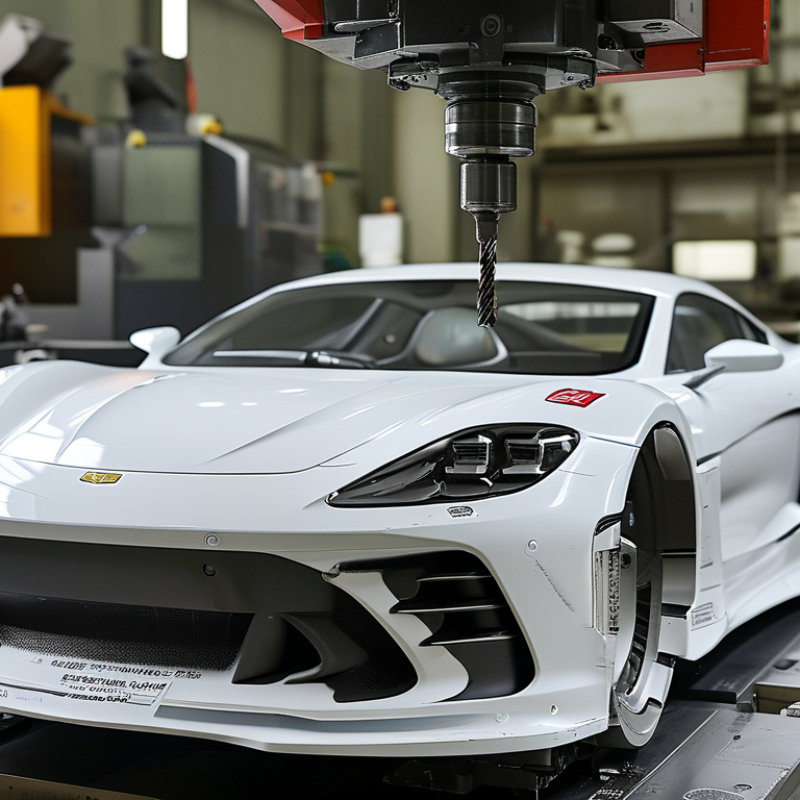
China’s automotive headlight mold industry covers the design, machining, testing, and maintenance of molds for lenses, housings, reflectors, and light guides. It serves passenger cars, commercial vehicles, and electric vehicles. Optical surfaces demand exceptional polishing accuracy. Small defects can create visible glare, haze, or uneven beam patterns.
Industry data shows strong underlying demand. OICA reported about 93.5 million motor vehicles produced worldwide in 2023. Fortune Business Insights valued the global automotive lighting market at approximately USD 34.1 billion that year. However, estimates differ because some reports include replacement lighting and electronics. China remains a major manufacturing base, supported by dense machining capacity and strong supply-chain integration. Yet production scale alone does not prove mold quality. Cooling balance, shrinkage control, steel selection, and dimensional inspection remain decisive. In practice, a mold may look excellent after machining but reveal warpage during repeated injection cycles. That gap deserves more attention.
Tips: Ask manufacturers for CMM records, mold-flow analysis, polishing standards, and trial-shot samples. Check cycle-life evidence, not only catalog claims. Review maintenance access around ejectors and cooling channels. A reliable supplier should explain tolerances clearly and admit design risks early. The “best” manufacturer is not always the cheapest or largest. Sometimes, the safer choice is the team that documents problems honestly.
| Category | Data Dimension | Verified Data or Definition | Industry Relevance | Reference |
|---|---|---|---|---|
| Industry Definition and Scope | ||||
| Definition | Automotive headlight mold | Precision tooling used to form headlamp lenses, housings, reflectors, bezels, and related optical or structural components. | The term covers mold design, machining, polishing, texturing, assembly, trial molding, measurement, and production support. | Industry terminology |
| Primary process | Plastic injection molding | The principal forming process for thermoplastic headlamp lenses, housings, bezels, and optical components. | Tooling must control shrinkage, warpage, weld lines, sink marks, optical distortion, and surface finish. | Automotive injection-molding practice |
| Common lens materials | Optical thermoplastics | Polycarbonate and polymethyl methacrylate are established materials for automotive lamp lenses, depending on design and performance requirements. | Material selection affects mold polish, venting, drying requirements, shrinkage compensation, and coating compatibility. | Automotive plastics engineering practice |
| Typical mold components | Tooling architecture | Core, cavity, inserts, sliders or lifters, ejector system, cooling channels, hot-runner or cold-runner system, and venting features. | Complex optical surfaces and undercuts increase the need for high-precision machining, alignment, and surface inspection. | Mold-engineering practice |
| Product scope | Lighting system coverage | Low-beam and high-beam lamps, daytime running lamps, fog lamps, signal lamps, adaptive front-lighting components, and rear lighting components. | Different optical functions require different surface geometries, textures, tolerances, and validation procedures. | UNECE lighting regulations |
| China Automotive Demand Indicators | ||||
| Vehicle manufacturing | China automobile production, 2023 | 30.161 million units | Provides the production base that drives demand for new headlamp molds, replacement tooling, and model-change programs. | CAAM, 2023 statistics |
| Vehicle manufacturing | China automobile production, 2024 | 31.282 million units | Production increased by approximately 3.7% year on year, supporting continued demand for automotive lighting tooling. | CAAM, 2024 statistics |
| Vehicle market | China automobile sales, 2023 | 30.094 million units | Sales volume indicates the scale of the domestic vehicle market served by lighting-component manufacturers and mold suppliers. | CAAM, 2023 statistics |
| Vehicle market | China automobile sales, 2024 | 31.436 million units | Sales increased by approximately 4.5% year on year, creating a large installed base for future service and replacement demand. | CAAM, 2024 statistics |
| New-energy vehicles | China NEV production, 2023 | 9.587 million units | NEV platforms commonly introduce new front-end styling, integrated lighting, and complex optical surfaces, generating new tooling programs. | CAAM, 2023 statistics |
| New-energy vehicles | China NEV production, 2024 | 12.888 million units | Production increased by approximately 34.4% year on year, strengthening demand for advanced lamp and optical-component molds. | CAAM, 2024 statistics |
| New-energy vehicles | China NEV sales, 2024 | 12.866 million units | NEVs accounted for approximately 40.9% of total automobile sales in China in 2024, increasing the importance of lightweight and integrated lighting designs. | CAAM, 2024 statistics |
| Compliance, Quality, and Supplier Evaluation | ||||
| Lighting installation | China regulatory reference | GB 4785 | Defines requirements related to the installation of external lighting and light-signalling devices on road vehicles. | Chinese national standard |
| International compliance | Headlamp and lighting references | UNECE R48, R112, R123, and R149 | These regulations address installation, headlamp performance, adaptive front-lighting systems, and road-illumination devices. | United Nations Economic Commission for Europe |
| Environmental validation | Road-vehicle environmental testing | ISO 16750 series | Covers environmental conditions and testing, including mechanical, climatic, and chemical loads relevant to vehicle components. | International Organization for Standardization |
| Dimensional quality | Critical inspection areas | Optical surface profile, parting-line alignment, wall thickness, sealing interface, mounting points, and shrinkage compensation. | Inspection should combine coordinate measurement, optical scanning, surface evaluation, and trial-part validation. | Automotive tooling quality practice |
| Supplier capability | Recommended evaluation dimensions | Engineering design, steel selection, CNC accuracy, EDM capability, polishing, mold-flow analysis, measurement systems, trial molding, and after-sales support. | A balanced evaluation is more reliable than judging a mold supplier only by price or nominal delivery time. | Procurement and tooling assessment practice |
| Commercial model | Typical tooling deliverables | DFM review, 3D mold design, mold-flow analysis, manufacturing, T0/T1 trials, dimensional reports, approved samples, spare parts, and maintenance documentation. | Clearly defined deliverables reduce technical risk during program launch and support repeatability across production sites. | Automotive mold-project practice |
Note: Production and sales figures are reported in vehicle units. Regulatory references and technical definitions should be checked against the latest applicable editions before use in a purchasing or compliance decision.