Top Tips for Choosing the Right Aircraft Mold for Your Needs?
When selecting an Aircraft Mold, understanding your specific needs is crucial. The right mold can significantly impact production quality and efficiency. Each aircraft part requires precision and attention to detail. It’s not just about choosing a mold; it’s about finding one that fits your specifications.
Factors like material, design complexity, and production volume should guide your decision. You might focus on technical features, but emotional resonance with your team is equally important. Sometimes, the best option isn’t the one that looks superior on paper. Reflect on your project’s unique challenges and ask relevant questions.
Consider consulting industry experts for additional insights. Their experience can highlight aspects you might overlook. Choosing the right Aircraft Mold is a balance of practicality and innovation. Approach this decision with care, and be open to exploring various options.
Identifying Your Aircraft Design Requirements and Specifications
When choosing an aircraft mold, start by identifying your design requirements. Consider the type of aircraft you are developing. Is it a small drone or a larger passenger plane? Each has unique specifications. Specifics like wingspan, weight, and material will affect the mold. Look closely at these factors before making a decision.
Your design should align with performance goals. Do you need the aircraft to be lightweight or sturdy? These choices can complicate your mold selection. You may want a complex shape, which can limit mold types. Think about your budget too. More intricate designs often come with higher costs. This demands careful planning and reflection.
Evaluate the expertise of your team. Do you have the skills and resources to work with complex molds? If not, it might be best to simplify your design or hire external expertise. Sometimes, less is more. Ensure your specifications are realistic and feasible within your constraints. Balancing ambition and practicality is key.
Evaluating Different Types of Aircraft Molds Available
When evaluating different types of aircraft molds, consider the specific requirements of your project. There are several options available, each with its unique features. For instance, fiberglass molds are lightweight and cost-effective. They are suitable for smaller aircraft components. However, they may not endure high-temperature environments as well as metal molds.
In contrast, metal molds provide durability and precise dimensions. They can withstand extreme conditions, making them ideal for larger aircraft parts. However, they are more expensive and require longer production times. A recent industry report indicates that over 45% of manufacturers face challenges in mold selection due to project specifications and budget constraints. Failing to choose appropriately can lead to production setbacks and increased costs.
Consider the materials used and the manufacturing process. Some molds may show signs of wear quickly, affecting the quality of the final product. Research indicates that nearly 30% of production delays result from mold-related issues. It’s essential to evaluate these factors carefully. This ensures the mold aligns with your needs and long-term project goals. Balancing cost and quality is crucial, but often challenging.
Top Tips for Choosing the Right Aircraft Mold for Your Needs
| Mold Type |
Material |
Weight (lbs) |
Cost ($) |
Typical Use |
| Injection Mold |
Aluminum |
50 |
25,000 |
Mass Production |
| Compression Mold |
Steel |
75 |
30,000 |
Complex Shapes |
| Thermoforming Mold |
Plastic |
30 |
10,000 |
Less Complex Parts |
| Blow Mold |
PET |
40 |
15,000 |
Hollow Parts |
| Squeeze Mold |
Composite |
60 |
20,000 |
Lightweight Components |
Considering Material Options for Aircraft Mold Construction
When selecting materials for aircraft mold construction, it's essential to weigh various options carefully.
Composite materials, for example, have gained popularity due to their strength-to-weight ratio.
Reports show that carbon fiber molds can reduce weight by up to 30% compared to traditional materials.
However, they often come at a higher cost. Familiarity with material properties helps in making informed decisions.
Thermoplastics present another viable option.
They offer a balance of flexibility and durability,
suited for specific applications. A study from the Aerospace Industry Association notes that
thermoplastic molds can improve cycle times by 15%. Yet, they are not ideal for every situation.
There are risks of warping or deformation under extreme conditions.
Metal molds are traditional choices, providing high precision and long-lasting use.
But they can be heavy and expensive. According to industry data,
metal molds can increase production costs by more than 25%.
Consideration of environmental impact is also crucial.
Many companies are moving toward more sustainable materials, which may require some trial and error.
Always reflect on the material's lifecycle and how it aligns with your production goals.
Assessing Budget Constraints and Cost Implications
Choosing an aircraft mold involves a careful assessment of your budget. Understanding how much you are willing to spend is vital. Costs can vary significantly based on design complexity and material quality. If you're not careful, those expenses can spiral out of control.
One tip is to outline your priorities. Determine what features are necessary versus those that are merely desirable. This helps in making cost-effective decisions. Sometimes, it may be tempting to select a cheaper option, but this can lead to problems. Quality should not be sacrificed for lower costs.
Consider exploring multiple suppliers. Gather quotes and evaluate what each offers in terms of value. Beware of hidden costs that could arise during production. Understanding these factors can help you avoid costly surprises. Always ask about warranty terms and support. Sometimes, spending a bit more now can lead to savings in the long run. Don't forget to reassess your choices as your project develops. Make your budget work for you!
Researching Suppliers and Their Reputation in the Industry
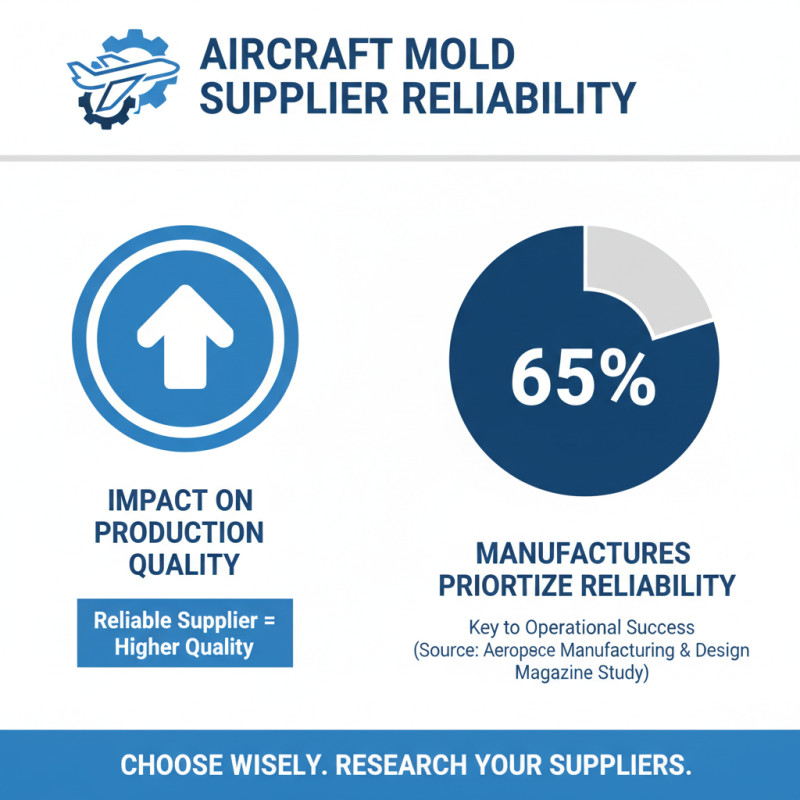
When choosing the right aircraft mold, supplier reputation plays a critical role. A reliable supplier can significantly impact your production quality. According to a study by the Aerospace Manufacturing and Design magazine, over 65% of manufacturers cite supplier reliability as a key factor in their operational success. This statistic highlights the importance of researching suppliers thoroughly.
Look for suppliers with a strong track record in the industry. Reviews and testimonials can provide insight into their reliability. For example, a survey by the National Business Aviation Association indicates that 70% of companies rely on supplier evaluations to inform their decisions. A history of positive customer experiences matters. However, it’s crucial to approach feedback critically. Some reviews may be biased or outdated.
Additionally, consider the certifications and quality standards that suppliers hold. Certifications like AS9100 can indicate a commitment to quality management. Yet, not all suppliers may meet these standards consistently. Be cautious of providers that do not readily share their credentials. This lack of transparency can signal underlying issues. Always dig deeper, even if the initial impression is positive.