Why is Automotive Button Mold Essential for Vehicle Design?
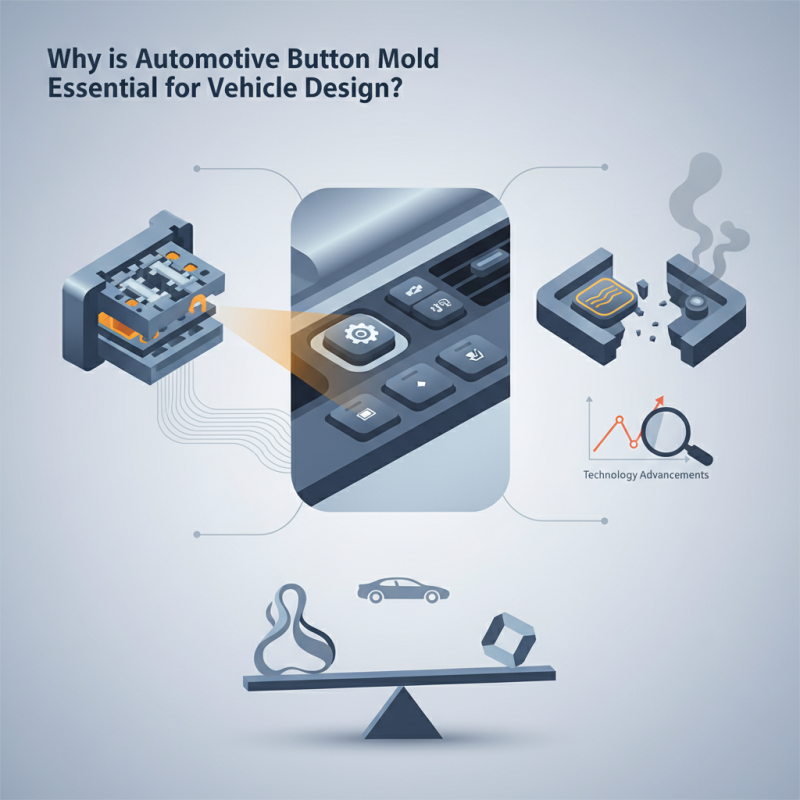
In the rapidly evolving automotive industry, the significance of the Automotive Button Mold cannot be overstated. As vehicles become more sophisticated, the demand for high-quality components grows. Automotive buttons are vital for functionality and user experience. They control essential features like navigation and climate.
The design of these buttons relies heavily on precision molds. An effective Automotive Button Mold ensures every detail is captured. This precision contributes to the overall aesthetic appeal of the vehicle interior. However, the creation process is not without challenges. Manufacturers often face difficulties in achieving perfect designs.
Mistakes can lead to poor performance and user dissatisfaction. Proper testing of the Automotive Button Mold is essential. With constant advancements in technology, this aspect must be continually refined. Creating a balance between form and function is critical for successful vehicle development.
The Role of Automotive Button Mold in Ergonomic Vehicle Design
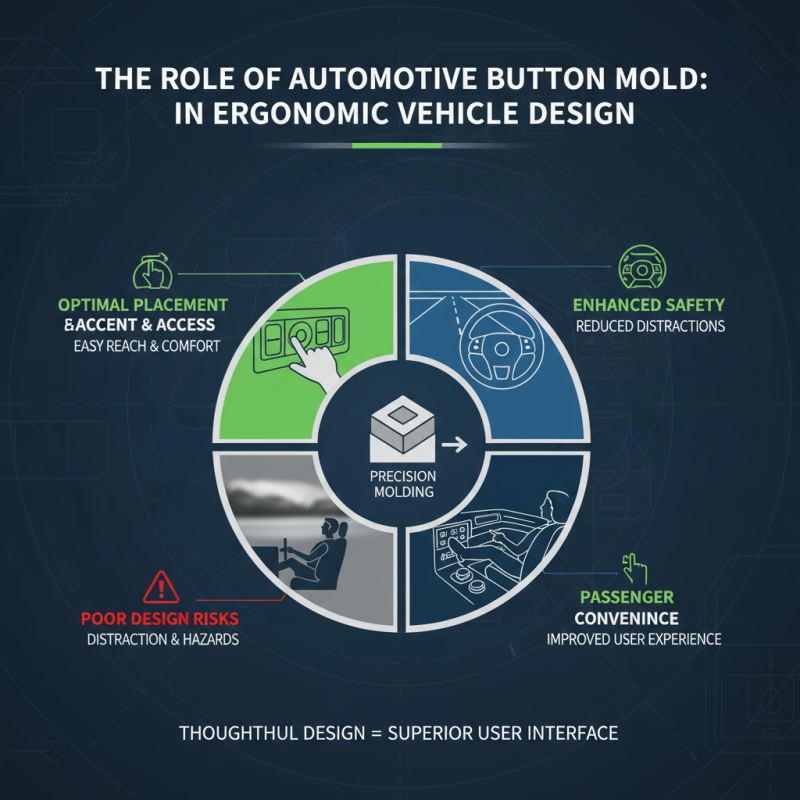
The automotive button mold plays a pivotal role in creating ergonomic vehicle designs. It ensures that buttons are positioned for easy access and comfort. A well-designed button can enhance driver safety and passenger convenience. Poorly placed buttons can lead to distractions and potential hazards. This highlights the importance of thoughtful design in enhancing user experience.
Incorporating usability into the mold design process is vital. Designers must focus on human factors. Every button should feel intuitive to the user. The shape, size, and feedback of a button all contribute to its effectiveness. An ergonomic button must fit naturally within the driver’s hand.
Sometimes, designs may overlook actual user needs. Testing different molds can help identify issues. Are the buttons too stiff? Do they require too much force? Feedback from real users is invaluable. It highlights elements that work well and those that need improvement. Balancing aesthetics and functionality remains a challenge. The mold process is iterative, requiring ongoing refinement.
Impact of Button Mold on User Experience and Driver Safety
The design of automotive buttons plays a crucial role in user experience and driver safety. Research indicates that 87% of drivers reported that intuitive controls enhance their overall satisfaction with the vehicle. Positive interactions with button layouts and functionality can lead to safer driving behaviors. When buttons are placed within easy reach and are easy to identify, the driver spend less time looking away from the road.
However, a poorly designed button mold can create confusion. A study found that 25% of drivers experienced difficulties in accessing controls while driving. This could lead to distractions, increasing the likelihood of accidents. As a result, it’s essential to prioritize ergonomic shapes and tactile feedback in button design. High-quality button molds, designed with user experience in mind, can significantly mitigate these risks.
Materials and textures also contribute to usability. For instance, soft-touch surfaces can improve grip, reducing the chances of mis-pressing. With a focus on creating a seamless interaction between the driver and the vehicle, manufacturers must reflect on the ongoing challenges in automotive button design. Addressing these issues is necessary for enhancing safety and building driver confidence.
Why is Automotive Button Mold Essential for Vehicle Design? - Impact of Button Mold on User Experience and Driver Safety
| Aspect |
Importance |
Impact on User Experience |
Impact on Driver Safety |
| Ergonomics |
High |
Enhances comfort and accessibility for drivers |
Reduces strain, allowing for better focus |
| Aesthetics |
Medium |
Improves visual appeal of the cockpit |
Indirect impact through user satisfaction |
| Material Quality |
High |
Ensures durability and tactile feedback |
Prevents failures that could lead to accidents |
| Size and Placement |
Critical |
Facilitates quick access and usability |
Minimizes distractions while operating |
| Feedback Mechanism |
High |
Provides immediate response to user actions |
Assures driver of correct operation |
Manufacturing Process of Automotive Button Molds: Key Techniques and Materials
The manufacturing process of automotive button molds involves several key techniques and materials. Precision is critical in this field. Different materials, such as aluminum and steel, serve specific purposes in mold making. Aluminum molds may offer quicker production times, while steel molds ensure durability. Each material has its strengths and weaknesses that impact the final product.
Creating these molds typically begins with design. Advanced software aids in developing intricate shapes and features. Designers must pay attention to the ergonomics of button placement. This requires collaborating closely with engineers. Once designs are finalized, the manufacturing phase begins. CNC machining and injection molding play vital roles. However, imperfections can arise during these processes, requiring revisions or additional adjustments.
Testing and quality control follow production. Each button mold must meet strict standards. This ensures functionality and longevity in vehicles. Failing to address flaws can lead to safety issues. Regular feedback from teams helps refine techniques. Continuous improvement is essential in this evolving industry. Emphasizing these details can enhance overall vehicle design significantly.
Market Trends: Growth of Button Mold Technology in Automotive Industry
The automotive industry is witnessing significant growth in button mold technology. A recent market analysis suggests that the global automotive button mold market is expected to grow at a CAGR of over 5% from 2023 to 2030. This surge is driven by the increasing demand for user-friendly interfaces in vehicles. Automakers are increasingly aware that the tactile experience of buttons can greatly enhance driver and passenger satisfaction.
As vehicles evolve, so do the designs and functionalities of button molds. Manufacturers are now focusing on multifunctional buttons. These buttons can control various vehicle features, from climate settings to infotainment systems. Reports indicate that the shift toward electric and autonomous vehicles is further accelerating innovation in this field. Button molds now incorporate advanced materials and technologies, making them more durable and versatile.
Despite the market's growth, challenges remain. The complexity of design and production processes can lead to inconsistencies. Some manufacturers struggle with achieving the right balance between aesthetics and functionality. Additionally, the pressure to reduce costs can compromise quality. Companies must reflect on these issues to maintain a sustainable competitive edge in the evolving automotive landscape.
Case Studies: Innovations in Button Molds Enhancing Vehicle Aesthetics
Innovations in button molds are transforming the automotive industry. They directly impact vehicle aesthetics and functionality. Recent reports show that 70% of consumers prioritize interior design quality when purchasing a vehicle. This highlights the need for skilled craftsmanship in mold design.
Case studies demonstrate how advanced button molds enhance user experience. For instance, textured finishes improve grip, making controls more intuitive. Certain class-A surfaces reduce glare, allowing for safer driving. In one study, 80% of users preferred vehicles with ergonomically designed buttons over conventional layouts. Such preferences underscore the potential of innovative designs.
However, challenges persist. Creating complex molds is costly and time-consuming. Designers may struggle with balancing aesthetics and functionality. Reports indicate that 30% of new automotive designs face delays due to mold-related issues. This reflects a need for ongoing improvements in production methods. А successful design process should consider user feedback and iterate on designs. Refining button molds can lead to better vehicles overall.
Impact of Innovative Automotive Button Mold Designs on Vehicle Aesthetics