Top 10 Tips for Choosing the Right Automation Equipment Molds?
In today’s rapidly evolving manufacturing landscape, selecting the right Automation Equipment Molds is crucial for operational efficiency. According to industry insights, automated systems are projected to enhance productivity by 25% by 2025, highlighting the importance of proper mold selection. The right molds not only increase production speed but also ensure product quality and reduce waste.
Many manufacturers struggle with mold selection due to complexity and the range of options available. A recent report indicated that over 60% of companies faced challenges in optimizing automation equipment. This raises concerns about resource allocation and operational efficiency. Companies need precise molds that align with their production goals and specific applications.
Investing in Automation Equipment Molds requires deep industry knowledge. It’s not just about purchasing the most expensive option; it’s about understanding how molds can improve performance and adapt to changing demands. Many businesses overlook this detail, leading to increased costs and inefficiencies. Reflecting on these aspects is essential for making informed decisions that drive growth and innovation.
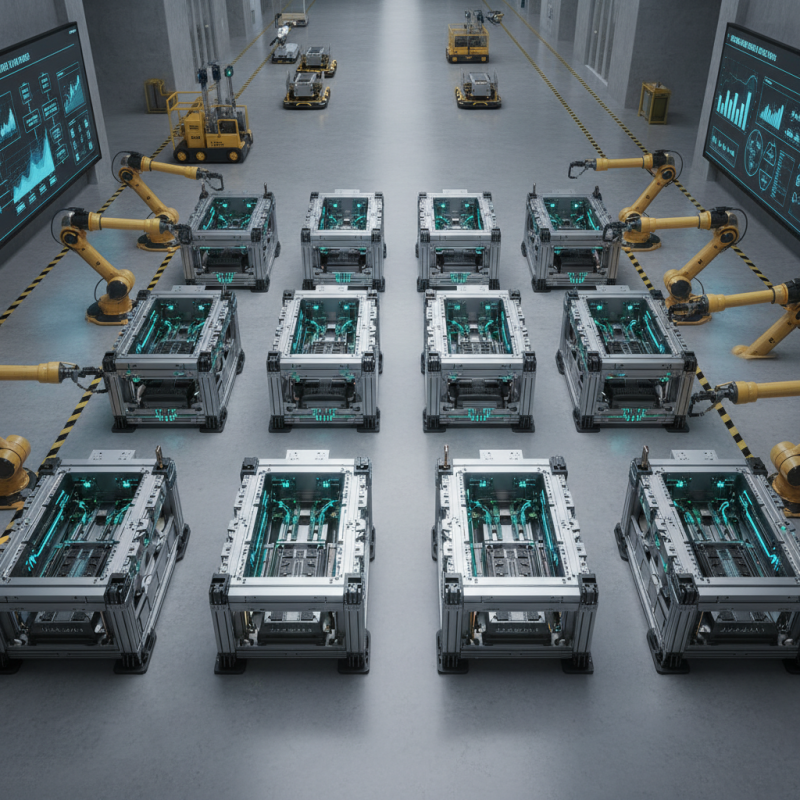
Understanding the Basics of Automation Equipment Molds
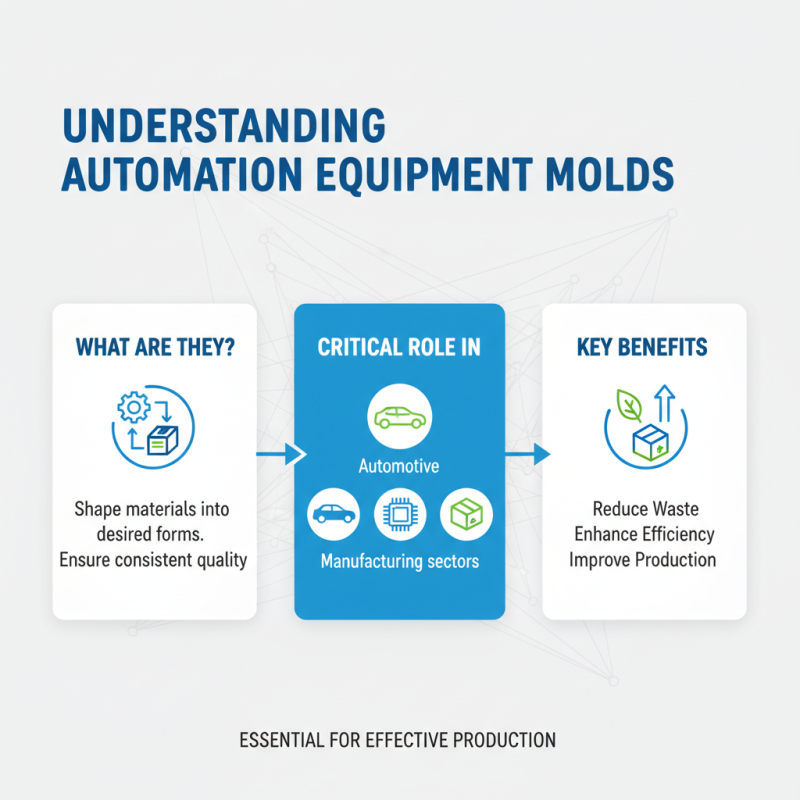
Understanding automation equipment molds is essential for effective production. These molds shape materials into desired forms, ensuring consistent quality. They play a critical role in manufacturing sectors such as automotive, electronics, and packaging. Selecting the right mold can reduce waste and enhance efficiency.
Various factors influence mold selection. Consider the material type you will use. Different materials require specific mold designs. Think about the production volume too. High-volume runs may need durable, more expensive molds, while small batches can benefit from simpler designs. However, reflecting on the cost versus the expected output is key. A less expensive mold may result in higher defects over time.
Quality of construction matters significantly. Molds must withstand heat and pressure. Less robust molds may save money initially but lead to greater long-term costs. Maintenance is another critical aspect. Regular checks can prevent breakdowns, ensuring smooth production. Still, it’s easy to overlook this until problems arise. Careful thought about these elements will lead to better decisions in automation.
Identifying Your Production Requirements and Goals
Identifying production requirements is crucial for choosing the right automation equipment molds. Many manufacturers overlook essential aspects in the early planning stages. Understanding specific needs can streamline production. For instance, a recent industry report indicated that efficient mold design can reduce energy consumption by up to 30%. This statistic highlights the importance of aligning mold characteristics with operational goals.
Consider the type of materials you will use. Different molds support different materials effectively. According to studies, the wrong material choice can lead to production delays and increased costs. Some production lines may need to adapt molds frequently, underscoring the need for flexibility. Engaging with industry experts during this stage can provide insights that improve mold selection.
Evaluating production volume is another significant factor. You can't choose a mold designed for low volume if your goal is mass production. Data shows that 40% of manufacturers face challenges due to mismatched mold capabilities. This can hinder growth and reduce competitiveness. Investing time to assess production goals ensures that your mold can support scaling operations successfully.
Top 10 Tips for Choosing the Right Automation Equipment Molds
| Tip Number |
Tip Description |
Key Considerations |
Expected Outcome |
| 1 |
Assess Production Volume |
Understand your production needs based on volume |
Effective scaling of production capacity |
| 2 |
Evaluate Material Compatibility |
Ensure molds can handle intended materials |
Reduced defects and failures |
| 3 |
Consider Production Speed |
Match mold design with production speed requirements |
Increased efficiency and throughput |
| 4 |
Review Design Complexity |
Assess how intricate the designs can be |
Achieve desired product features |
| 5 |
Analyze Maintenance Needs |
Evaluate ease of maintenance for sustainability |
Lower downtime and costs |
| 6 |
Plan for Automation |
Integrate automation into mold design from the start |
Enhanced production control |
| 7 |
Set Budget Constraints |
Define your budget and stick to it |
Cost-effective solutions |
| 8 |
Seek Expert Consultation |
Consult with experts for tailored advice |
Better decision-making |
| 9 |
Understanding Lead Times |
Factor in the lead time for mold production |
Timely project completion |
| 10 |
Evaluate Supplier Reliability |
Research suppliers' track records |
Consistent quality and delivery |
Evaluating Material Types and Their Applications
Evaluating material types is crucial when selecting automation equipment molds. The right material can significantly impact product quality and production efficiency. Common materials include thermoplastics, thermosets, and metals. Each material has distinct properties and applications, which must be carefully assessed.
Thermoplastics are versatile and easy to shape. They work well in high-volume production. However, they may not withstand extreme temperatures.
Thermosets, on the other hand, offer better heat resistance but are more challenging to mold. Understanding these trade-offs is essential for informed decision-making.
Metals, like aluminum and steel, provide durability but can raise costs. The weight and strength of metal molds can impact handling and setup. It’s wise to reflect on specific project needs. Consider the manufacturing environment, budget, and production goals. Each material choice influences overall performance. A careful evaluation leads to better outcomes and fewer production issues.
Analyzing Cost vs. Performance for Mold Selection
Choosing the right automation equipment molds hinges on understanding cost versus performance. The initial cost may seem low, but inferior materials can lead to higher long-term expenses. Poor performance often results in increased downtime and maintenance needs. It is essential to balance these factors for sustainable operations.
When evaluating molds, consider the production environment. Harsh conditions might require sturdy materials, which can increase upfront costs but save in repairs. High-performance molds generally yield better quality products, enhancing your overall process. It’s often a trade-off between cost and durability.
Tip: Always review supplier credibility. Look for manufacturers with proven track records. This will help ensure that you receive reliable, consistent products. Another important aspect is to conduct thorough testing of the molds before full-scale production. This step can reveal potential issues early on, saving both time and resources. The goal is not just to save money but to invest wisely in quality that lasts. Reassess your choices based on performance data. It may lead you to make better decisions over time.
Considering Future Scalability and Maintenance Needs
Choosing automation equipment molds requires foresight. Considering future scalability is vital for long-term success. Businesses should anticipate growth and changes in production. Flexibility in mold design allows for adjustments down the line. This adaptability means you can modify production without significant overhauls.
Maintenance needs often evolve with usage. Selecting molds that are easy to maintain can save time and costs. Look for designs that simplify repairs and inspections. Regular upkeep ensures efficiency but may require specific training. Assessing skill levels within your team can guide your choice. Molds that are challenging to service may lead to unexpected downtime.
Investing in scalable, maintainable molds is not always straightforward. Sometimes, immediate needs can overshadow long-term vision. This can lead to choices that seem ideal now but falter later. Reflecting on past decisions can provide insights. Future-proofing your selection today can position your business for tomorrow’s demands.
Top 10 Factors to Consider When Choosing Automation Equipment Molds
This chart represents the top 10 factors to consider when selecting automation equipment molds, rated on a scale from 1 to 10 for their importance in decision-making.