Choosing the 2026 best Advanced Mold Technology manufacturers requires more than comparing machine prices. A reliable review must examine mold accuracy, cycle stability, cooling design, surface quality, automation, and after-sales support. These details decide whether a mold produces consistent parts or creates costly flashes, warpage, and downtime.
Industry data shows why this field deserves careful attention. Fortune Business Insights reported that the global injection molded plastics market reached approximately USD 278 billion in 2023. It also projects continued growth through 2030. The Wohlers Report 2024 valued the global additive manufacturing industry at USD 20.0 billion in 2023. This growth supports wider use of conformal cooling channels, metal additive manufacturing, digital simulation, and hybrid tooling. However, market growth does not automatically prove manufacturing quality. That assumption needs examination.
John Bozzelli, founder of Injection Mold and Process Consulting, often emphasizes, “The mold is the heart of the process.” His practical view remains relevant in 2026. A polished showroom, for example, cannot replace proven tool life. A strong manufacturer should provide measurable tolerances, documented steel grades, cooling test results, and traceable quality records. This guide compares leading manufacturers through those standards, while considering automotive, medical, electronics, packaging, and precision industrial needs. Some rankings may remain debatable. Regional service capability can matter more than global revenue. The best supplier is not always the largest one. Reliability appears in small details, such as a clean mold trial report and a technician who explains a defect clearly.
2026 Best Advanced Mold Technology Manufacturers?
What Advanced Mold Technology Means in 2026
Advanced mold technology in 2026 means more than faster machines. It connects design data, material behavior, sensors, cooling systems, and production feedback. Digital simulation can predict filling problems before steel is cut. Conformal cooling can reduce hot spots around complex cavities. Embedded sensors can monitor pressure, temperature, and cycle stability during production. These tools help manufacturers improve consistency, reduce trial rounds, and control energy use. However, technology alone cannot replace experienced technicians. A poorly calibrated sensor may create confident but incorrect decisions.
Tips: Check cooling performance, sensor accuracy, mold steel quality, and maintenance support. Ask for test records, not attractive claims. Review sample parts under real production conditions.
Reliable manufacturers explain their process clearly. They provide measurable data, including cycle time, dimensional variation, surface quality, and expected mold life. Strong engineering teams also consider resin behavior, part tolerances, ejection stress, and future repairs. A digital twin is useful, but only when its assumptions match the factory floor. This is where some projects fail. The model looks precise, yet the actual material changes slightly between batches. Careful validation remains essential. The best advanced mold partner combines automation with practical judgment, documented testing, and honest communication when a design needs revision.
Advanced mold manufacturers rely on digital design, simulation, and precision machining to control complex production requirements. Engineers build 3D mold models before cutting steel. Flow analysis predicts filling, air traps, weld lines, and shrinkage. This helps teams adjust gates and wall thickness earlier. Still, simulation depends on accurate material data. Poor inputs can produce confident but misleading results.
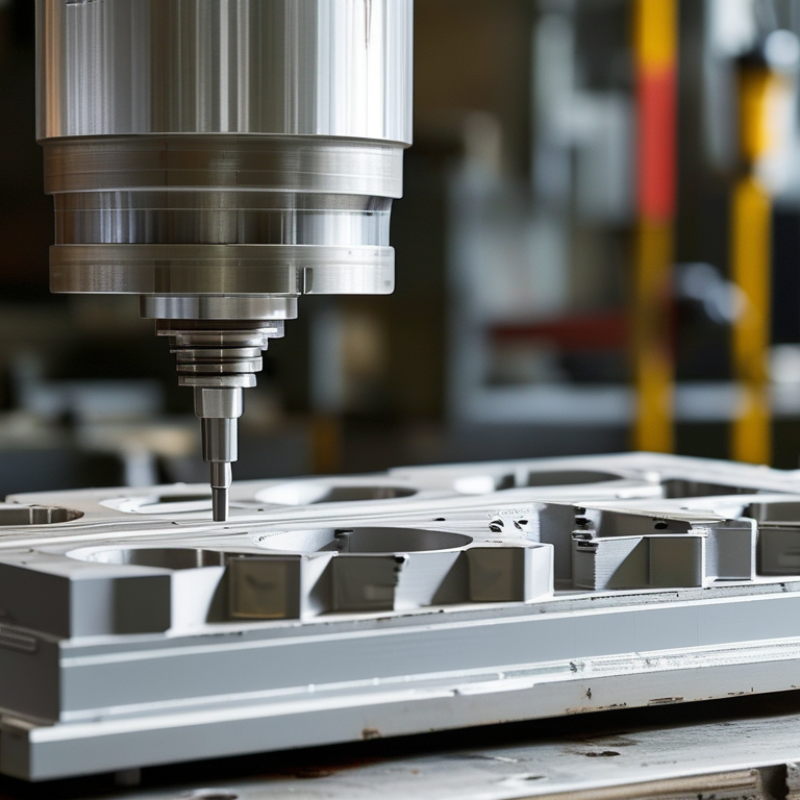
High-speed CNC machining creates tight cavity details with repeatable accuracy. Electrical discharge machining handles narrow ribs, sharp corners, and hardened tool steel. Coordinate measuring machines inspect critical dimensions after machining. Some facilities use automated probing during production. These checks reduce manual errors, although calibration must remain consistent. A measurement report is only useful when operators understand its limits.
Conformal cooling is another important technology. Internal channels follow the cavity shape, improving heat transfer around uneven surfaces. This can shorten cycle times and reduce warpage. Metal additive manufacturing makes these channels possible in difficult areas. However, printed inserts may require extra finishing and careful leak testing. Advanced manufacturers also connect machine data, maintenance records, and inspection results through traceable software. Human judgment still matters. A clean dashboard cannot replace an experienced toolmaker examining a damaged edge or unusual surface mark.
When evaluating advanced mold technology manufacturers for 2026, inspect evidence, not polished claims. A factory tour should reveal machining accuracy, inspection routines, and traceable steel certificates. Ask for cavity measurement records, mold-flow analysis, and documented trial results. These details expose process maturity.
Market demand also matters. PlasticsEurope reported global plastics production of about 413.8 million tonnes in 2023. The International Federation of Robotics recorded 541,302 industrial robot installations worldwide that year. These figures suggest rising pressure for repeatable, automated production.
A capable manufacturer should therefore support robotic demolding, sensor integration, and stable cycle control. Request actual cycle-time data from comparable projects. Do not accept broad percentages without test conditions.
Evaluate the complete ownership period. Compare tool life, maintenance access, spare-part availability, cooling-channel design, and response times. Ask how engineers handle flash, warpage, or uneven cooling after production begins.
Digital monitoring is useful, but it cannot replace experienced troubleshooting. No scorecard is perfect. My own assessment would include a witnessed mold trial, a dimensional report, and three customer references from similar materials.
I would also examine failed projects, if the manufacturer will discuss them honestly. That uncomfortable conversation may reveal more than a showroom. Industry 4.0 language sounds impressive, yet reliable documentation remains the stronger proof of advanced mold capability.
Advanced mold manufacturers now compete through measurable performance, not polished claims. According to Grand View Research, the global injection molded plastics market was valued at over USD 180 billion in 2023 and is expected to grow steadily through 2030. Leading toolmakers respond with conformal cooling, simulation software, sensor-based monitoring, and high-speed machining. These features can shorten cycle times, reduce warpage, and improve repeatability. Results still depend on material choice and operator experience.
Automotive manufacturers use complex molds for lightweight interior panels, battery housings, and precision connectors. Medical producers require cleanroom-compatible tooling, tight tolerances, and traceable maintenance records. Packaging plants usually prioritize fast cycles and thin-wall performance. Electronics manufacturers demand micro-features and stable dimensions. MarketsandMarkets identifies automotive, healthcare, packaging, and electronics as major application areas for advanced injection molding. Yet no technology solves every defect. Some manufacturers still underestimate mold maintenance, especially after changing recycled resin content.
Tips: Ask for measured cycle-time data, not general promises. Review cooling-channel design, steel certification, maintenance intervals, and sample inspection reports. A factory visit can reveal more than a brochure. Check it carefully. Manufacturers with strong engineering teams usually explain failure risks openly and document corrective actions. For high-volume projects, request a digital mold-flow study and a small pilot run before full production. This approach costs more initially, but it can expose hidden shrinkage, cooling imbalance, or ejection problems early.
| Manufacturer Segment | Core Mold Technology | Typical Mold Materials | Typical Precision Level | Primary Industry Applications | Production Strength | Common Quality Practices |
|---|---|---|---|---|---|---|
| High-Precision Injection Mold Manufacturers | High-speed CNC machining, wire EDM, sinker EDM, conformal cooling, and automated mold tryout | Pre-hardened tool steel, hardened stainless steel, copper alloys, and corrosion-resistant mold steel | Typical mold component tolerances of approximately ±0.005–0.020 mm, depending on geometry and process | Medical devices, optical components, laboratory consumables, electronics, and precision engineering parts | Complex multi-cavity molds, tight part-to-part repeatability, and high-volume production support | Coordinate measuring machines, mold-flow analysis, dimensional inspection, and documented process control |
| Automotive Structural Mold Manufacturers | Large-format injection molding, gas-assisted molding, foaming technologies, and integrated cooling-channel design | Large-section tool steel, pre-hardened steel, wear-resistant inserts, and aluminum for selected prototype tools | Typical general mold machining accuracy of approximately ±0.020–0.050 mm, subject to mold size and part design | Instrument panels, door modules, bumpers, consoles, battery housings, and under-hood components | Large molds, long cycle-life requirements, complex slides, lifters, and extensive thermal management | Finite-element analysis, mold-flow simulation, dimensional scanning, welding-line evaluation, and endurance trials |
| Thin-Wall Packaging Mold Manufacturers | High-speed injection molding, stack molds, hot-runner systems, rapid cooling, and automated unscrewing or demolding | Hardened stainless steel, corrosion-resistant steel, wear-resistant inserts, and polished cavity materials | High repeatability for wall thickness, gate position, neck finish, and cycle-time consistency | Food containers, beverage closures, personal-care packaging, household containers, and pharmaceutical packaging | Multi-cavity production, short cycle times, high cavitation, and compatibility with automated packaging lines | Leak testing, cavity-balance checks, weight monitoring, visual inspection, and statistical process control |
| Medical and Cleanroom Mold Manufacturers | Micro-molding, precision injection molding, validated mold design, polished cavities, and controlled surface finishes | Stainless mold steel, corrosion-resistant tool steel, titanium or carbide inserts for selected wear conditions | Fine dimensional control with cavity surface finishes selected for cleanliness, release, and functional performance | Syringe components, diagnostic consumables, surgical instruments, inhaler parts, and disposable medical assemblies | Small-part precision, repeatable tooling, multi-cavity designs, and compatibility with regulated production | Cleanroom-compatible procedures, material traceability, dimensional validation, risk analysis, and documented change control |
| Die-Casting Mold Manufacturers | High-pressure die-casting tooling, vacuum-assisted die casting, thermal-balance design, and conformal cooling | Hot-work tool steel, nitrided steel, copper-alloy cooling inserts, and erosion-resistant components | Typical cavity and insert accuracy commonly controlled within approximately ±0.020–0.050 mm, depending on size | Automotive powertrain parts, transmission housings, electric-drive units, structural castings, and industrial equipment | High thermal-fatigue resistance, large cavity volumes, high injection pressure, and demanding cooling performance | Thermal simulation, X-ray or CT inspection of castings, die-temperature monitoring, and crack-life evaluation |
| Compression and Transfer Mold Manufacturers | Compression molding, transfer molding, automated charge placement, and controlled venting design | Hardened tool steel, stainless steel, chrome-plated surfaces, and wear-resistant inserts | Controlled flash, parting-line accuracy, cavity balance, and repeatable pressure distribution | Electrical insulation parts, rubber seals, composite panels, brake components, and thermoset housings | Suitable for thermosets, elastomers, fiber-reinforced compounds, and heat-resistant materials | Flash measurement, cure-cycle validation, material-flow analysis, hardness checks, and functional testing |
| Composite and Lightweighting Mold Manufacturers | Compression tooling for fiber-reinforced polymers, resin-transfer molding, low-pressure molding, and heated tooling | Tool steel, invar, nickel alloys, aluminum tooling plate, and high-temperature composite tool materials | Controlled surface profile, thermal expansion management, and repeatable fiber-placement or resin-flow geometry | Automotive lightweight structures, aerospace interiors, wind-energy parts, sporting goods, and industrial enclosures | Large-format tooling, low-density structures, integrated heating, and complex composite layup surfaces | Digital inspection, fiber-orientation analysis, resin-flow simulation, thermal mapping, and non-destructive testing |
| Rapid Tooling and Additive Mold Manufacturers | Metal additive manufacturing, conformal cooling, hybrid machining, rapid prototyping, and digital mold repair | Maraging steel, tool steel, stainless steel, aluminum alloys, and copper-based thermal inserts | Final accuracy is generally achieved through post-machining, polishing, and dimensional verification | Prototype vehicles, customized medical products, consumer electronics, pilot production, and complex inserts | Shorter development cycles, internal cooling channels, topology-optimized inserts, and fast design iteration | Powder traceability, density testing, CT inspection of internal channels, heat-treatment records, and CMM inspection |
| Multi-Material and Two-Shot Mold Manufacturers | Two-shot molding, insert molding, overmolding, rotary or indexing mold systems, and automated material sequencing | Hardened tool steel, stainless steel, wear-resistant inserts, and specialized surface-treatment materials | Controlled alignment between substrates, sealing surfaces, shutoffs, and functional interface dimensions | Automotive switches, consumer electronics, medical handles, seals, grips, and illuminated components | Integrated multi-material production, reduced assembly requirements, and improved product sealing or ergonomics | Material-compatibility testing, bond-strength evaluation, mold-flow analysis, alignment inspection, and cycle validation |
| Prototype and Low-Volume Mold Manufacturers | CNC-machined aluminum tooling, modular inserts, soft tooling, silicone tooling, and hybrid rapid manufacturing | Aluminum alloys, pre-hardened steel, epoxy tooling board, silicone rubber, and low-volume tool steels | Accuracy is optimized for design verification and pilot production rather than maximum production life | Product development, engineering validation, market testing, replacement parts, and customized equipment | Fast design changes, lower initial tooling cost, short lead times, and flexible engineering support | Prototype dimensional reports, fit-and-function testing, sample approval, and documented design revisions |
| Tool Repair, Refurbishment, and Life-Extension Specialists | Laser cladding, precision welding, insert replacement, cavity polishing, re-machining, and preventive maintenance | Tool steel, stainless steel, nickel-based repair alloys, copper alloys, and replacement inserts | Restoration targets are based on original drawing requirements, wear condition, and approved engineering changes | Automotive, packaging, consumer goods, industrial equipment, and long-running production programs | Reduced downtime, extended mold life, improved part quality, and lower cost than complete tool replacement | Failure analysis, wear mapping, hardness testing, laser-profile measurement, and post-repair validation |

Advanced mold manufacturing is moving from metal cutting toward connected, measured production. In 2026, engineers will use digital twins to test filling, cooling, and part release before steel is machined. Sensor data from pressure, temperature, and vibration will expose drift earlier. This matters when a tiny vent defect becomes thousands of rejected parts. Practical experience still beats software alone. A simulation can be elegant and wrong. Toolmakers must compare predictions with cavity measurements and trial results.
Conformal cooling will expand through metal additive manufacturing and hybrid inserts. Curved channels can shorten cycle times and reduce hot spots around ribs and corners. However, complex channels create inspection challenges. CT scanning, flow testing, and documented maintenance will become normal quality controls. AI will recommend process settings from historical runs, but engineers should challenge unusual suggestions. Blind trust is risky. Materials are also changing. Recycled polymers, bio-based compounds, and lightweight alloys demand new wear and corrosion data.
The strongest manufacturers will connect design, machining, molding, and service records in one traceable system. This supports faster root-cause analysis and more consistent decisions across shifts. Cybersecurity and access control will matter as connected equipment spreads. Workforce skills will shift toward data interpretation, metrology, and process validation. Yet automation will not remove judgment. Some plants may purchase advanced tools before fixing basic cleanliness, calibration, and operator training. That is an expensive mistake. The future looks highly digital, but reliable molds will still depend on disciplined hands, honest measurements, and willingness to revise assumptions.