Top 10 Agricultural Machinery Molds for Global Buyers?
In the fast-evolving world of agriculture, "Agricultural Machinery Molds" play a crucial role. These molds are essential for producing various types of machinery that enhance farming efficiency. With the agricultural sector facing new challenges, it's vital to explore top-quality molds that meet global standards.
Farmers and manufacturers depend heavily on the reliability of these molds. They help create equipment designed for modern farming techniques. Understanding the importance of precision and durability in Agricultural Machinery Molds is key. It's an area that demands careful consideration for maximum productivity.
Despite advances, there are areas requiring improvement. Not all molds meet the necessary specifications. Global buyers need to be cautious when selecting manufacturers. Investing time in research can prevent costly mistakes. Proper evaluation ensures the chosen molds support sustainable agricultural practices.
Overview of Agricultural Machinery Molds in the Global Market
Agricultural machinery molds play a crucial role in today’s farming practices. They are essential for producing robust machinery parts that enhance efficiency and productivity on farms worldwide. A reliable mold can significantly reduce production costs. However, not all molds are created equal. The choice of materials and design greatly influences the end product’s durability.
Understanding the global market for these molds is vital for buyers. Factors such as regional demand, technological advancements, and material availability shape this market. Emerging economies show a rising need for modern agricultural equipment. This trend encourages mold manufacturers to innovate. The production processes vary, and buyers often need to navigate this complexity. Some molds may offer cheaper initial prices but lack long-term reliability. Investing in durable molds often leads to better performance over time.
Molds also face challenges. Production defects can arise due to a lack of quality control. Buyers must be cautious when selecting suppliers. An effective mold not only needs to perform well but also has to meet regulatory standards. Understanding these challenges allows buyers to make informed decisions. It is crucial to consider both short-term benefits and long-term value when investing in agricultural machinery molds.
Key Features to Consider When Selecting Agricultural Machinery Molds
When selecting agricultural machinery molds, key features significantly impact effectiveness and efficiency. Understanding material compatibility is vital. Different crops require unique molds, affecting yield and quality. Consideration of durability is also important. High-stress fields demand robust materials that resist wear and tear. Regular wear can lead to costly replacements.
Moreover, precision plays a significant role. Accurate molds enhance production consistency. Farmers seek reliable molds to reduce variability in output. An essential aspect of mold design is ease of maintenance. Complex designs may complicate repairs. Simple, effective designs are often superior.
It's also worth reflecting on the technological advancements in mold production. Emerging technologies promise to improve mold performance. However, not all innovations meet practical needs. Assessing the real-world application of new materials and designs can prevent costly decisions. Balancing innovation with practical use is key in making informed choices.
Top 10 Popular Agricultural Machinery Molds and Their Applications
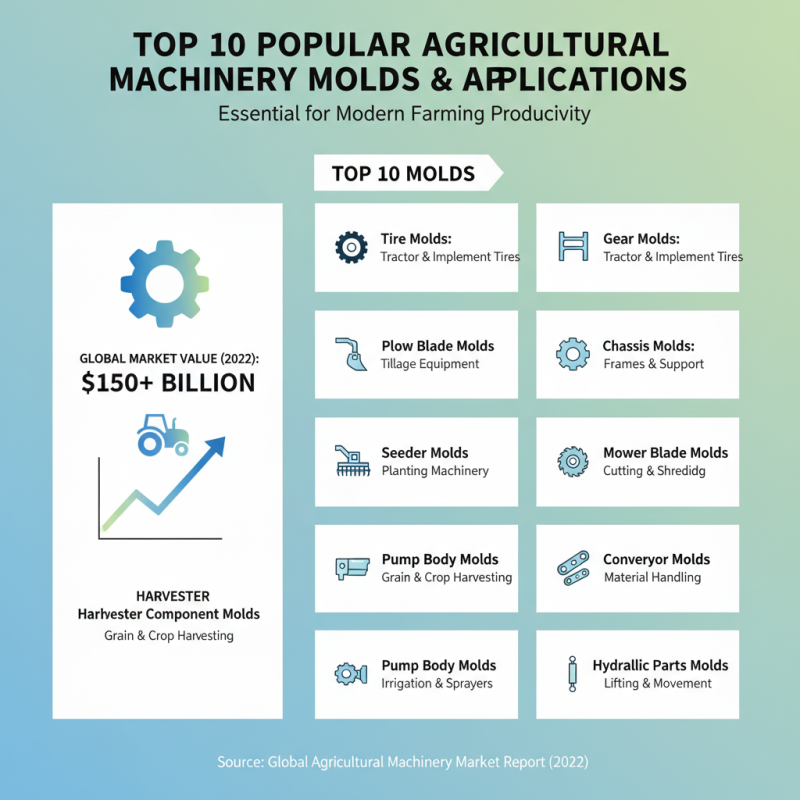
Agricultural machinery molds play a crucial role in modern farming. They are essential for producing various equipment that enhances productivity. According to the Global Agricultural Machinery Market Report, the global agricultural machinery market size was valued at over $150 billion in 2022. This highlights the importance of high-quality molds in ensuring efficient production.
Top molds encompass a range of applications. For instance, tillage equipment molds help create plows and harrows, which are vital for soil preparation. Similarly, crop processing molds facilitate the manufacturing of harvesters and threshers. Precision in these molds ensures better yields. Reports indicate that a slight improvement in machinery efficiency can increase crop yields by 5-10%.
However, challenges persist. Many manufacturers face issues in mold durability and adaptability. Feedback from industry professionals shows that frequent replacements lead to downtime. This can impact the overall productivity of agricultural operations. Continuous innovation in mold technology is necessary to address these shortcomings.
Comparative Analysis of Materials Used for Agricultural Molds
In the agricultural machinery sector, the choice of mold materials greatly impacts functionality and longevity. Commonly used materials include aluminum, steel, and various polymers. Each material offers specific advantages, depending on the application. For instance, aluminum molds are lightweight and provide excellent thermal conductivity, making them suitable for high-volume production. According to a recent industry report, aluminum molds can reduce cycle times by 20% when compared to steel.
Steel molds, while heavier and more costly, boast higher durability. They are particularly beneficial for parts that require precision and can withstand harsh agricultural environments. However, the initial investment can be a barrier for smaller manufacturers. Research indicates that while steel molds might represent 25% of the initial costs, they can lead to a 30% longer lifespan, making them cost-effective in the long run.
Polymer molds are increasingly popular for their versatility and reduced production costs. They are easier to manufacture and can be used for creating complex designs. However, they may not offer the same robustness as their metal counterparts. Data from the agricultural technology authority suggests that nearly 40% of companies are shifting towards polymer-based molds, attracted by their affordability despite the trade-off in longevity. This trend highlights the need for careful evaluation of both material and design to optimize performance.
Future Trends in Agricultural Machinery Mold Production and Usage
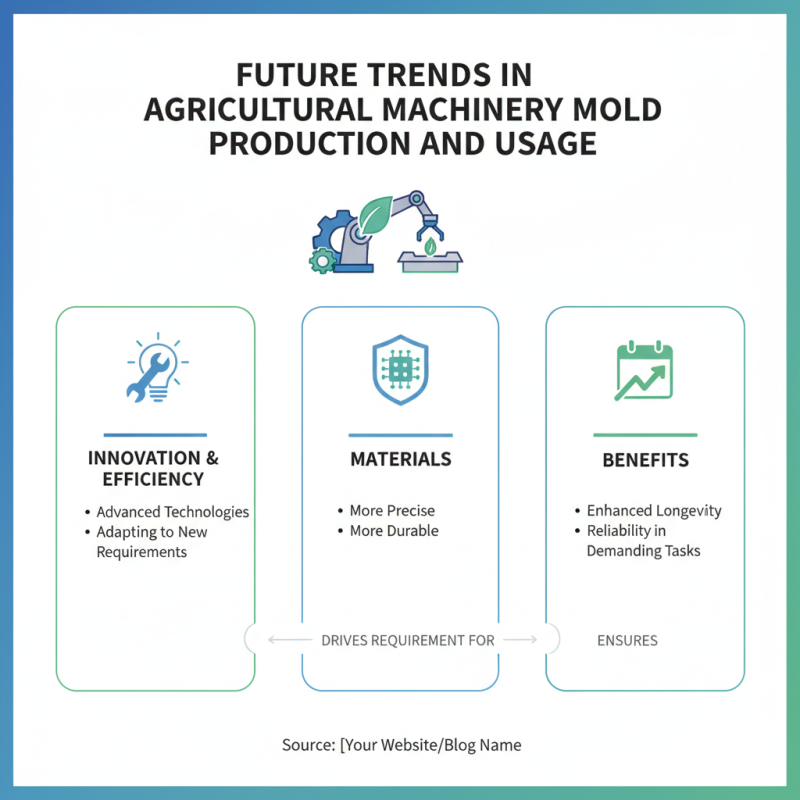
The future of agricultural machinery mold production focuses on innovation and efficiency. As farmers adopt advanced technologies, molds must adapt to new requirements. More precise and durable materials are essential. These materials enhance the longevity of molds while ensuring their reliability in demanding tasks.
Sustainability is another significant trend. Manufacturers are increasingly seeking eco-friendly materials. Biodegradable options can reduce the carbon footprint of agricultural production. However, finding the right balance between sustainability and performance remains challenging. Many existing molds still rely on traditional materials, which raises concerns about environmental impact.
Automation is set to play a critical role in mold production. Automated systems can improve accuracy and reduce human error. However, the transition to automation may pose challenges, such as the need for skilled operators. The industry must consider whether it can adapt quickly enough to keep pace with emerging technologies. Remaining flexible and open to change will be vital for success in this evolving landscape.