Leave Your Message
Choosing among China’s Cosmetics Mold manufacturers takes more than comparing prices or polished factory photos. The right partner should understand how a compact cap, thin-walled jar, or detailed lipstick case behaves after repeated production runs. Small flaws matter. A rough parting line can catch a fingertip; uneven cooling can distort a container’s shape.
Quality expert W. Edwards Deming wrote, “Quality comes not from inspection, but from improvement of the production process.” That principle applies to mold sourcing: reliable results depend on design reviews, material selection, machining accuracy, and trial adjustments—not just final inspection. Buyers should ask how suppliers check mold steel, control dimensions, test samples, and manage revisions. Clear answers are useful. Vague promises are not.
This guide looks at leading Chinese manufacturers through practical criteria: cosmetics-packaging experience, engineering support, equipment, quality controls, communication, and after-sales service. It also considers whether a supplier can show relevant projects and explain its process in specific terms. No manufacturer is perfect, and a strong website alone proves little. Request drawings, sample parts, and documented inspection details before making a decision. The comparison aims to help buyers identify capable partners, while recognizing that the best fit depends on product design, production volume, and project requirements.
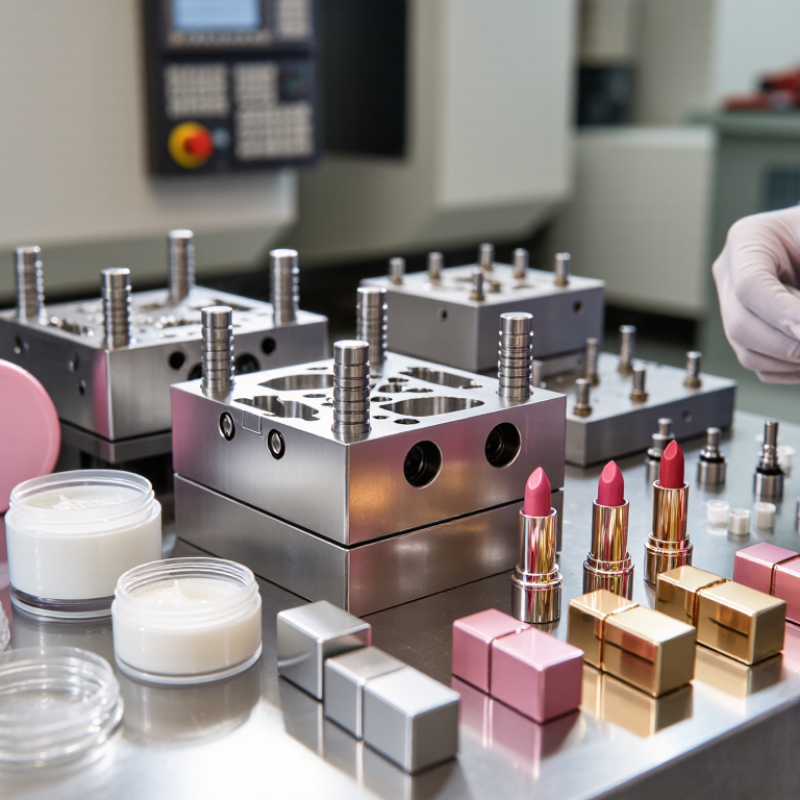
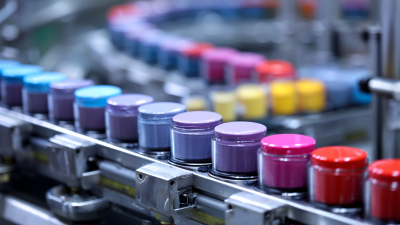
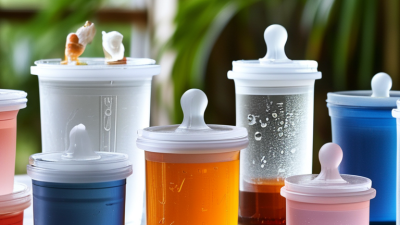
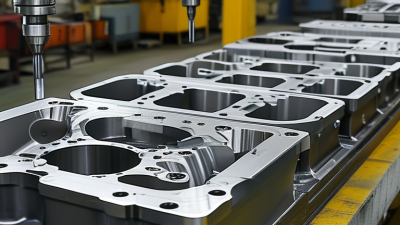
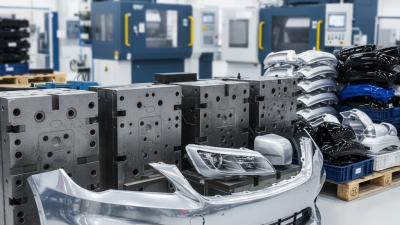
Cosmetics molds are precision tools that shape the containers and closures used for beauty products. They form items such as cream jars, lotion bottles, compact cases, and caps. Common processes include injection molding for detailed parts and blow molding for hollow bottles. The mold controls dimensions, surface finish, and how consistently parts fit together. Small details matter.
In production, engineers assess resin flow, cooling channels, draft angles, and ejection points. These choices help prevent warping, visible sink marks, or parts sticking inside the tool. A cap may look simple, yet its threads must match the bottle neck. A smooth sample can still conceal problems that appear only after repeated production. Tool trials and dimensional checks help expose them.
The market context is substantial. Fortune Business Insights’ Cosmetics Packaging Market report estimated the global market at about US$32.7 billion in 2023, with growth projected through 2032. That figure covers packaging, not molds alone, but it signals demand for reliable tooling. Cosmetics molds serve packaging producers, contract fillers, and product developers testing new shapes. Their practical value is clear: consistent parts, less material waste, and containers that protect formulas during storage and use.
Cosmetics molds are precision-made tools used to shape packaging components or solid cosmetic products. The appropriate mold depends on the part design, production process, material, and required output.
| Mold or Tooling Type | Typical Process | Common Materials | Where It Is Used | Key Design Considerations |
|---|---|---|---|---|
| Injection mold for caps and closures | Plastic injection molding | Often PP or PE; material varies by design | Bottle caps, pump collars, flip-top closures, and other package components | Thread fit, sealing surfaces, hinge performance, cavity balance, and consistent dimensions |
| Injection mold for jars and cases | Plastic injection molding | Common options include PP, PET, and other moldable thermoplastics | Cream jars, powder compacts, cosmetic cases, and inner packaging parts | Wall thickness, surface finish, shrinkage, parting lines, and fit between assembled parts |
| Preform injection mold | Injection molding followed by stretch blow molding | PET | Preforms used to produce many clear cosmetic and personal-care bottles | Preform weight, neck finish, gate quality, cooling, and compatibility with the blow-molding process |
| Bottle blow mold | Stretch blow molding or extrusion blow molding, depending on the bottle and resin | PET is commonly stretch-blow-molded; PE is commonly extrusion-blow-molded | Shampoo, lotion, cleanser, and other liquid-product bottles | Bottle shape, wall distribution, neck dimensions, cooling, and mold venting |
| Multi-cavity injection mold | Plastic injection molding with multiple part-forming cavities | Selected according to the molded component, such as PP, PE, or PET | High-volume production of small, repeated parts such as caps and compact components | Cavity-to-cavity consistency, balanced filling, cooling uniformity, and ease of maintenance |
| Compression mold for solid products | Compression molding or pressing, depending on the product formulation | Material-specific formulations; examples include soap and certain solid cosmetic products | Shaped bars and other solid products made by pressing or molding | Product release, surface detail, pressure distribution, and compatibility with the formulation |
| Prototype or short-run mold | Prototype tooling or low-volume molding; process depends on the part | Chosen to suit the prototype process and testing requirements | Design validation, fit checks, appearance samples, and limited production runs | Prototype objectives, tooling cost, lead time, and how closely the process represents production |
Mold selection should be based on the product geometry, resin or formulation, production volume, dimensional requirements, and intended molding process. A mold type alone does not determine product quality; tool design, process settings, and quality control also matter.