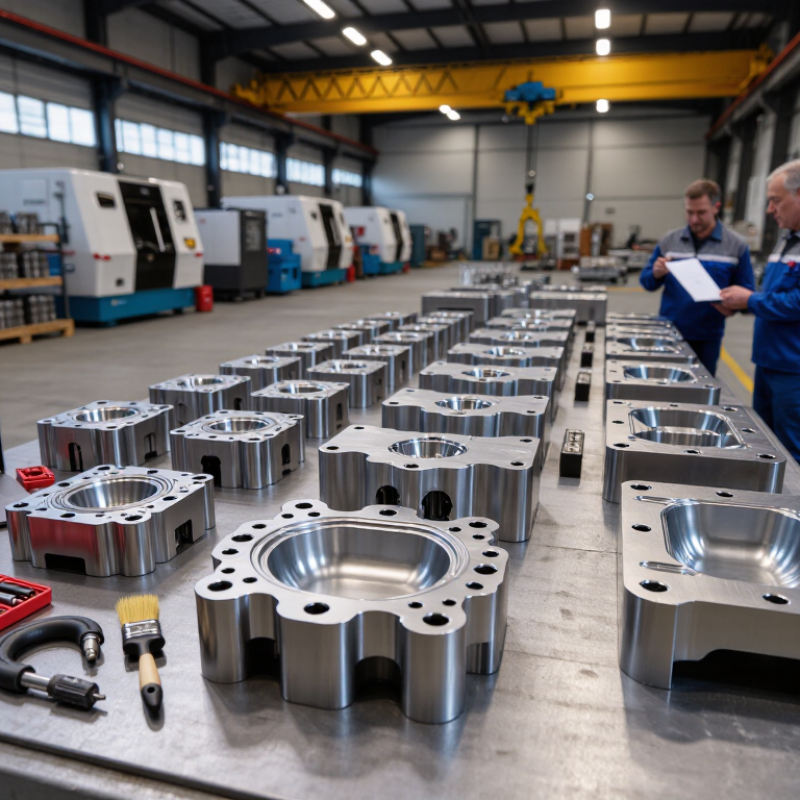
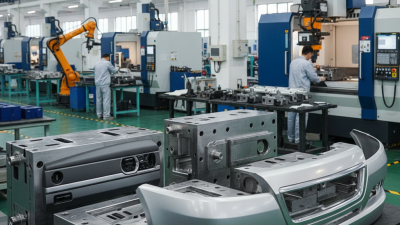
Choosing Agricultural Machinery Molds worldwide requires more than comparing prices or reviewing polished supplier photographs. A mold must match the machine’s workload, production volume, raw material, and regional maintenance capacity. A compact tractor hood, for example, may require different steel, cooling channels, and ejection strength than a heavy-duty plow component.
Dr. Steven R. Schmid, a recognized manufacturing engineering educator and author, offers a useful principle: “Manufacturing begins with understanding the process, not merely making the part.” That idea applies directly to Agricultural Machinery Molds. Buyers should examine cavity geometry, dimensional tolerance, surface finish, and expected cycle life. Mold steel selection matters. Hardened tool steel may support repeated production, while a lower-cost option could suit limited seasonal output.
Ask for trial reports, material certificates, maintenance instructions, and replacement-part availability. Inspect how the supplier manages welding repairs, polishing, venting, and cooling-channel blockages. A factory visit or independent quality audit can reveal details hidden in a quotation. Look closely at machining marks and parting-line alignment.
Global sourcing adds practical complications. Communication delays, shipping damage, currency changes, and unfamiliar service standards can affect the real cost. A cheaper mold may become expensive after one damaged insert. Not every premium specification is necessary, either. That is where judgment becomes difficult.
Reliable selection combines engineering evidence with field experience. Agricultural Machinery Molds should be evaluated across their complete service life, not only at purchase. One small oversight may remain. Rechecking the decision is wise.
Agricultural machinery molds shape the parts that work through dust, vibration, rain, and repeated impact. Injection molds produce plastic housings, engine covers, fuel tanks, and protective guards. They support accurate dimensions and fast production. Compression molds form rubber seals, belts, and flexible protective parts. These molds must control pressure and heat carefully. A small temperature variation can create weak edges or uneven surfaces.
Metal forming molds serve another role. Stamping dies create brackets, panels, blades, and structural supports from steel or aluminum sheets. Die-casting molds produce compact metal components with detailed cavities. These parts often connect hydraulic, transmission, or steering systems. Each mold type affects strength, surface finish, production speed, and repair costs. I have found that mold selection works best when engineers examine the complete machine, not one part alone.
Material behavior deserves close attention. Reinforced plastics may reduce weight, but they can wear mold surfaces faster. Hard steel improves service life, although machining costs more. Cooling channels, draft angles, ejector positions, and replaceable inserts also influence reliability. A perfect mold rarely exists. Compromises remain. One overlooked vent can leave burn marks on a tractor panel. Trial production should test filling, warpage, trimming, and assembly under realistic workshop conditions. Local climate, transport distance, maintenance skills, and applicable safety requirements can also change the best manufacturing choice worldwide.
Selecting agricultural machinery molds requires more than comparing quotations. The mold must match the part’s material, production volume, and working environment. A housing used near soil and moisture needs stable dimensions, strong wear resistance, and reliable surface protection. Check the required tolerances before discussing price.
Tool steel quality matters. Proper hardness reduces cracks around thin ribs and sharp corners. Cooling channels should be positioned near heavy sections, where uneven cooling can cause warping. Small details matter. During mold evaluations, inspect sample parts under real assembly conditions. A component may look acceptable but fail when bolts, seals, or moving shafts are fitted.
Supplier capability also deserves close attention. Review machining equipment, inspection records, mold trials, and maintenance procedures. Ask for dimensional reports, material certificates, and a clear repair plan. Traceable records improve reliability across different countries and production sites. Local voltage, shipping conditions, technical language, and safety requirements can affect delivery and installation. These issues are easy to underestimate.
A low quotation can be attractive. It can also hide weak steel or limited after-sales support. I would not approve a mold without checking cycle time, expected service life, spare inserts, and trial results. However, service-life estimates remain imperfect because abrasive materials and operator habits vary. Rechecking assumptions is necessary. The best choice balances precision, durability, production efficiency, and practical support rather than focusing on the cheapest offer.
When choosing agricultural machinery molds worldwide, material selection should match the part’s working environment. Mold steel with high wear resistance suits abrasive, glass-filled plastics. Pre-hardened steel can reduce machining time for medium-volume production. For corrosive fertilizers or humid storage, corrosion-resistant grades deserve closer attention. Material certificates and heat-treatment records should be available for every critical mold.
Precision affects assembly, vibration, and field repairs. A practical evaluation checks cavity dimensions, parting-line alignment, ejector movement, and cooling-channel balance. For large housings, uneven cooling may create warpage near bolt holes. Use coordinate measurement reports, not visual confidence alone. Tight tolerances are useful, but unnecessary precision can increase cost without improving machine performance. Measure twice. Review the drawing.
Service life depends on more than steel hardness. Cycle count, resin additives, clamping pressure, maintenance access, and operator habits all matter. Replaceable inserts can protect high-wear areas and simplify future repairs. Ask for maintenance schedules, spare-part guidance, and repair response times across regions. A mold that lasts 500,000 cycles may still be unsuitable if cleaning requires excessive downtime. Real production trials are stronger evidence than promises. One weakness is easy to miss: a polished surface can look excellent while hidden cooling channels remain poorly balanced. Experienced suppliers should explain these limitations clearly and provide inspection records, trial samples, and corrective-action details.
Comparison of commonly used mold materials by hardness, typical dimensional tolerance, and estimated service life. Values are representative industrial ranges and may vary with mold design, heat treatment, material grade, cooling, and maintenance.
P20 is suitable for general-purpose molds and moderate production volumes. H13 provides better wear and thermal-fatigue resistance, while S136 is preferred when corrosion resistance, polished surfaces, and longer service life are important. Lower tolerance values indicate higher dimensional precision.
Choosing an agricultural machinery mold supplier requires more than comparing quotations. The OECD-FAO Agricultural Outlook 2023–2032 projects global agricultural output to grow about 1.1% annually. This growth increases pressure for durable, repeatable components. Ask suppliers for steel mill certificates, heat-treatment records, and dimensional inspection reports. For large covers, housings, and guards, confirm mold-flow analysis and cooling-channel design. A cheaper mold may create flash, warping, or uneven wall thickness after several thousand cycles.
Production capacity needs practical verification. Check available CNC, EDM, wire-cutting, and trial-press equipment. Confirm maximum mold size and machine tonnage, not only the supplier’s monthly output claim. ISO 9001 certification supports controlled procedures, but it cannot replace physical evidence. Review sample CMM reports, maintenance logs, spare-insert plans, and documented corrective actions. The supplier should explain how it handles steel shortages, design changes, and urgent repairs. Capacity matters. Yet, capacity figures can be optimistic.
Tips: Request a pilot mold or a short production trial. Measure five to ten parts from different cycles. Compare weight, surface finish, assembly fit, and cooling time. Ask for a signed timeline with design approval, machining, testing, and delivery dates. Visit the facility remotely if travel is difficult. Look for organized tool rooms, labeled steel, and real inspection activity. I have found that clean records often predict better communication, although they do not guarantee perfect molds. Allow contingency time. Global shipping rarely follows the first promised date.
Choosing agricultural machinery molds worldwide begins with a precise ordering brief. Describe the machine part, material, expected production volume, and working environment. Include drawings, critical dimensions, surface requirements, and acceptable tolerances. Ask for steel certificates, heat-treatment records, and inspection procedures. These documents make supplier comparisons more reliable.
A trial mold should be tested with the intended material and production settings. Check part dimensions, flash, filling balance, ejection marks, and cycle stability. Inspect several consecutive samples, not just one successful piece. Measure them with calibrated tools and record the results. Small temperature changes can reveal weak cooling channels. The first trial may fail. That is useful evidence, not wasted effort.
Maintenance starts immediately after production stops. Remove residue before it hardens, then dry every cavity, vent, and sliding surface. Apply a suitable protective coating when the mold will sit unused. Store it on a stable support, away from moisture and vibration. Inspect guide pins, seals, cooling passages, and ejector components at scheduled intervals. Keep a service log with cycle counts, repairs, and unusual noise. In practice, teams sometimes neglect this record. They regret it when defects appear months later. A yearly inspection alone may be insufficient for high-cycle agricultural parts. Use production data to adjust the maintenance interval.
| Process Stage | Mold Application | Recommended Mold Material | Key Selection Data | Ordering Requirement | Testing and Acceptance | Maintenance Practice |
|---|---|---|---|---|---|---|
| Requirement Definition | Fenders, covers, guards, housings, and protective panels | Pre-hardened tool steel for repeated production; aluminum tooling for short runs and prototypes | Part size, wall thickness, draft angle, annual volume, and surface finish | Provide 3D CAD data, 2D drawings, resin specification, color requirements, and expected service life | Review parting lines, shrinkage allowance, ejection points, cooling layout, and mold-flow risks before manufacture | Keep approved drawings, revision records, resin data, and inspection standards together |
| Supplier Evaluation | Injection molds for polymer components used on tractors, harvesters, and implements | Corrosion-resistant steel is useful for moisture-sensitive or glass-fiber-filled materials | Machining capability, heat-treatment control, metrology, documentation, and export experience | Request a written scope covering tooling design, sampling, modifications, packaging, spare parts, and delivery terms | Check calibration records for measuring equipment and confirm that inspection reports use the same drawing revision | Define responsibility for storage, transport protection, repairs, and future engineering changes |
| Design Review | Large structural plastic parts and complex trim components | Hardened steel inserts in high-wear areas; replaceable inserts for logos, ribs, and shut-off surfaces | Typical draft angle: about 0.5°–2° per side, subject to texture, material, and geometry | Confirm cooling-channel access, lifting points, mold weight, machine compatibility, and spare-insert strategy | Perform mold-flow analysis where filling, weld lines, air traps, or warpage may affect part function | Design removable wear components to reduce downtime and avoid replacing the complete mold |
| Manufacturing | Metal forming dies for brackets, shields, blades, and structural sheet-metal parts | Die steel selected according to forming load, wear level, sheet thickness, and production volume | Guide-post alignment, punch-to-die clearance, surface hardness, and cutting-edge condition | Specify sheet material grade, thickness tolerance, press capacity, stroke, feed direction, and progressive-operation sequence | Verify critical dimensions with a coordinate measuring machine or calibrated gauges; inspect formed trial parts | Apply a suitable rust preventive, protect cutting edges, and store dies on stable supports |
| First Trial | Prototype or first-off sampling for injection and forming molds | Production-intent material should be used whenever possible to obtain representative results | Part dimensions, weight, appearance, fit, flash, short shots, cracks, and deformation | Agree on trial quantity, machine parameters, sample labeling, defect classification, and correction limits | Use approved gauges and drawings; record process settings, sample measurements, photos, and nonconformities | Clean the mold after sampling and record any adjustment made to vents, gates, inserts, or forming surfaces |
| Dimensional Approval | Precision components such as couplers, mounting covers, sensor housings, and fluid-system guards | Steel grade and heat treatment should match the expected wear, corrosion, and fatigue conditions | Critical dimensions, geometric tolerances, fit points, sealing surfaces, and assembly interfaces | Define a measurement plan with characteristic numbers, tolerances, datum references, and sampling frequency | Use calibrated instruments; compare first-article results with the latest approved CAD and drawing data | Monitor shut-off wear, parting-line mismatch, insert movement, and damage to sealing or locating surfaces |
| Functional Testing | Working components and safety-related protective parts | Use a mold construction that supports stable repeatability under the intended production cycle | Assembly fit, load response, movement clearance, leak resistance, and operating temperature range | State functional test conditions, acceptance limits, test fixtures, and required production-equivalent samples | Test parts in the intended assembly or with an equivalent fixture; document failures and corrective actions | Inspect ejection, slides, lifters, springs, hydraulic components, and sensors at scheduled intervals |
| Production Release | Repeat-production molds for regional or international manufacturing sites | Material and surface treatment should be selected for the planned cycle count and local environment | Cycle target, machine fit, changeover time, spare-part availability, and process capability | Include final drawings, mold data sheets, maintenance manuals, spare-part lists, inspection reports, and packing records | Complete a production-run trial and confirm stable dimensions, cycle time, scrap rate, and operator safety | Record cycle counts, lubrication dates, repairs, changes, and storage conditions in a mold history file |
| International Shipment | Tools transported between manufacturing regions with different humidity and handling conditions | Use compatible anti-corrosion protection and moisture-resistant packaging for steel tooling | Crate strength, center of gravity, lifting points, gross weight, dimensions, and humidity protection | Prepare a packing list, lifting instructions, preservation period, identification marks, and customs documentation | Inspect the crate and mold immediately after arrival; check rust, impact marks, coolant connections, and alignment | Reapply rust protection after inspection and store the mold in a dry, covered area when not installed |
| Routine Maintenance | All injection molds, dies, and forming tools in regular agricultural machinery production | Use approved lubricants, cleaners, rust inhibitors, and replacement materials compatible with the tool | Inspection frequency based on cycle count, wear rate, material abrasiveness, and operating environment | Set preventive-maintenance intervals for cleaning, lubrication, vent inspection, cooling checks, and alignment checks | Measure recurring critical features and compare results with baseline data to identify gradual tool deterioration | Clean resin, metal particles, and moisture; lubricate moving elements; inspect vents and protect exposed steel |
| Corrective Repair | Molds showing flash, burrs, dimensional drift, sticking, cracks, or inconsistent filling | Repair method depends on base steel, hardness, coating, damaged depth, and required dimensional recovery | Defect location, severity, production impact, repair time, and risk of altering critical geometry | Approve repair scope before welding, polishing, re-machining, insert replacement, or surface treatment | Repeat dimensional, functional, and appearance checks after repair; compare repaired samples with approved standards | Update the repair history, root cause, replaced parts, cycle count, and next inspection date |
| Long-Term Storage | Seasonal tools, backup molds, and dies held between production programs | Clean, dry, and corrosion-protected steel tooling with sealed coolant and hydraulic connections | Storage humidity, preservation duration, support stability, and protection from dust and impact | Label the tool with identification code, weight, storage date, preservation method, and lifting instructions | Inspect at planned intervals for corrosion, leakage, deformation, pest damage, and loss of protective coating | Close and protect cavities, relieve unsuitable hydraulic pressure, rotate movable elements where appropriate, and renew protection as required |