Choosing the right Die Casting Mold supplier can shape your product’s quality, cost, and launch schedule. A reliable supplier does more than produce a mold. They understand metal flow, cooling channels, ejection systems, surface finishes, and the pressures of repeated production. Their decisions become visible in every casting, from small electronic housings to heavy automotive components.
Experience matters. Ask how many similar molds the supplier has completed, not only how long the company has operated. Request sample drawings, inspection reports, trial records, and photographs of finished molds. A professional supplier should explain steel selection, mold life, tolerance control, maintenance needs, and expected production volume in clear language. They should also discuss possible defects, such as porosity, flash, warping, or incomplete filling. Honest warnings are valuable.
Communication reveals reliability.
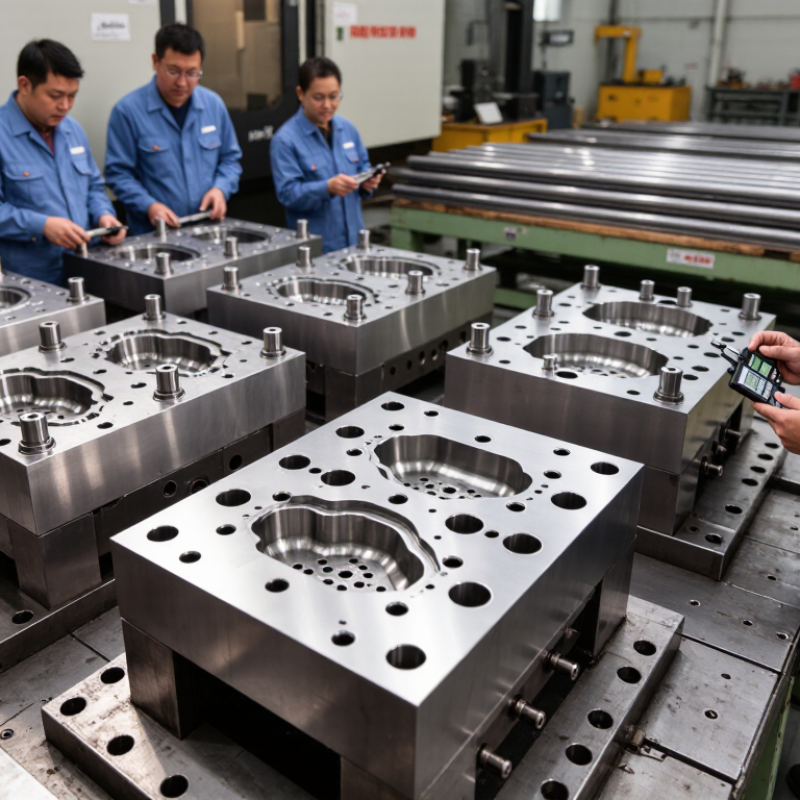
A dependable partner provides realistic quotations and detailed timelines. They confirm design changes before machining begins and share progress during critical stages. Certifications may support credibility, but they do not replace technical evidence or consistent results. Visiting the factory, when practical, can reveal important details: organized tooling areas, calibrated measuring equipment, clean assembly benches, and experienced technicians checking fit by hand. Still, no supplier is perfect. A polished presentation can hide weak after-sales support, while a smaller workshop may offer stronger attention and faster problem-solving. This guide will help you compare capability, quality control, communication, cost, and long-term service before signing an agreement.
Before contacting a supplier, define your die casting mold requirements in measurable terms. Specify the alloy, part dimensions, wall thickness, and expected production volume. Include critical tolerances, surface finish, draft angles, and areas requiring slides or inserts. A sample 3D model helps, but it cannot replace clear written requirements.
Set production goals that match real operating conditions. State the target cycle time, planned annual output, mold life, and acceptable maintenance intervals. Consider whether the mold will support one cavity or multiple cavities. Ask for cooling channel plans, ejection methods, material specifications, and inspection procedures. An experienced supplier should explain how each choice affects cost, reliability, and delivery time.
A perfect forecast is rarely possible. Early volumes may change, and some design assumptions may prove wrong during trials. Build controlled revisions into the project instead of hiding them. Request trial-shot records, dimensional reports, repair plans, and previous experience with similar geometries. Review how the supplier handles flashing, porosity, soldering, and uneven filling. These details reveal practical competence better than polished sales language. I have seen projects lose time because maintenance access was ignored. That small omission became expensive. Your requirements should therefore include cleaning access, replacement parts, spare inserts, and communication responsibilities. A reliable supplier will question weak specifications and document every agreed change.
Choosing the right die casting mold supplier requires more than comparing prices. Assess the team’s practical expertise first. Ask how they handle shrinkage, parting lines, venting, and mold wear. Request examples of similar molds, including corrective actions and production results. A capable supplier explains decisions clearly, not with vague promises.
Equipment reveals whether that expertise can become stable production. Inspect CNC machining accuracy, EDM capability, mold trial facilities, and measurement equipment. Check whether the supplier uses coordinate measuring machines and records tool dimensions. Quality management should include material certificates, inspection plans, process monitoring, and full traceability. Ask how they control revisions and approve repairs. A certificate alone proves little. During an audit, small issues matter, such as unclear calibration labels or incomplete maintenance records. These details can expose larger weaknesses.
Tips: Visit the workshop if possible. Talk with engineers, not only sales staff. Ask to see a rejected sample and its root-cause report. Compare the supplier’s documented process with actual operator practice. If the answers feel polished but lack measurements, pause. Supplier selection is rarely perfect; even experienced teams can overlook communication gaps, especially during urgent design changes.
How to Choose the Right Die Casting Mold Supplier?
Choosing a die casting mold supplier starts with material evidence, not attractive presentations. Ask for mold steel grades, hardness data, heat-treatment records, and expected shot life. Tool steel must match alloy temperature, pressure, and production volume. A material choice can look economical, yet fail after repeated thermal cycling. The International Aluminium Institute reports that recycling aluminum uses about 5% of the energy required for primary production. A supplier should therefore discuss recycled-content compatibility and surface-quality risks, not only price.
Design capability matters just as much. Review the supplier’s experience with wall thickness, draft angles, slides, ejector systems, and cooling channels. Simulation should identify air entrapment, shrinkage, soldering, and hot spots before steel is cut. The U.S. Department of Energy notes that aluminum can reduce weight by roughly 40% in selected vehicle components. That benefit depends on accurate filling and stable dimensions. Request flow-analysis images, dimensional reports, and sample inspection data. Small details matter.
Manufacturing processes reveal reliability. Confirm CNC machining, EDM, heat treatment, polishing, coating, trial shots, and correction procedures. NADCA product standards provide useful benchmarks for tolerances and die casting quality. A capable supplier should measure critical features with CMM equipment and document every revision. One uncomfortable lesson is that the first trial rarely proves everything. Ask how defects are recorded and corrected. A cheaper mold may become expensive when cooling is uneven, flash appears, or repairs interrupt production. Supplier selection should include a witnessed trial, not just a signed quotation.
Compare mold materials, design capabilities, and manufacturing processes using a practical technical screening framework.
The benchmark evaluates common die-casting supplier requirements on a 0–100 scale. Material selection considers hot-work tool steel suitability and heat treatment; design capability covers mold-flow analysis, cooling design, and DFM; manufacturing control includes CNC machining, EDM, polishing, dimensional inspection, and process documentation. Higher scores indicate stronger overall technical capability.
Choosing the Right Die Casting Mold Supplier
Price is important, but the lowest quotation can hide costly compromises. Ask for a line-by-line breakdown covering mold steel, machining, trials, surface treatment, and revisions. A cheap mold is not always economical. I have seen savings disappear after repeated fitting work and delayed samples.
Request a realistic lead-time plan, not a hopeful date. The schedule should show design approval, material ordering, CNC machining, assembly, first trial, and corrections. Confirm how holidays, engineering changes, and failed samples affect delivery. Ask for evidence, such as recent production records or trial reports. Numbers matter. A supplier that explains delays early is more dependable than one that stays reassuringly vague.
Communication should include named contacts, response targets, and controlled document sharing. Weekly updates with photographs can reveal worn electrodes, incomplete machining, or an untested cooling channel. Technical support matters after the mold leaves the workshop. Check whether the team can review parting lines, draft angles, shrinkage, venting, and maintenance procedures. Ask who supports troubleshooting during production. Some suppliers use impressive engineering language but provide weak floor-level help. That gap deserves attention. I would also test the relationship with a small technical question before signing. The answer may expose more than a polished presentation.
| Supplier Profile | Typical Mold Price Range | Prototype Lead Time | Production Mold Lead Time | Communication Standard | Technical Support | Quality and Documentation | Overall Evaluation |
|---|---|---|---|---|---|---|---|
| Prototype-Focused Toolmaker | USD 3,000–10,000 for a simple aluminum die-casting mold; complex tooling may cost more | 2–4 weeks | 5–8 weeks | Replies within one business day; weekly progress updates; video meetings available | Strong support for design-for-manufacturing reviews, trial planning, and rapid modifications | Basic dimensional report, material certificate, and trial records; formal process documentation may be limited | 7.8/10 |
| Standard Production Toolmaker | USD 8,000–25,000 for medium-complexity tooling, depending on size, slides, and cooling design | 3–5 weeks | 8–12 weeks | Dedicated project contact; scheduled reports; clear engineering-change approval process | Good support for mold-flow review, gating, overflow, venting, cooling, and die-life planning | Inspection plan, steel certificates, trial reports, dimensional inspection, and spare-part recommendations | 9.0/10 |
| High-Volume Automotive Toolmaker | USD 20,000–60,000 or more for large, multi-slide, or high-cycle molds | 4–6 weeks | 12–20 weeks | Formal project governance, milestone reviews, engineering-change control, and escalation procedures | Advanced simulation, thermal-balance analysis, cycle-time optimization, and production ramp-up support | Comprehensive traceability, capability studies, preventive-maintenance plan, and controlled documentation | 9.2/10 |
| Low-Cost Export Toolmaker | USD 2,500–12,000 for simple-to-medium molds; unusually low quotations require detailed scope checks | 3–6 weeks | 8–14 weeks | Response time varies; communication may rely mainly on email or messaging platforms | General engineering assistance is available, but advanced simulation and local service may be limited | Quality records depend heavily on the contract; confirm steel grade, heat treatment, inspection method, and acceptance criteria | 7.0/10 |
| Integrated Casting and Tooling Partner | USD 10,000–40,000 for tooling, often quoted together with casting, machining, and finishing services | 3–5 weeks | 9–16 weeks | Single point of contact across tooling and casting; production feedback is usually fast | Strong practical support for casting defects, porosity reduction, machining allowance, and process optimization | Process-control plan, first-article inspection, casting-quality data, and production feedback are typically available | 8.8/10 |
| Local Service-Oriented Toolmaker | USD 12,000–35,000, generally reflecting higher labor and service costs | 3–6 weeks | 8–14 weeks | Fast local communication, on-site meetings, and easier coordination during trials and corrections | Good hands-on support, especially for mold repairs, troubleshooting, maintenance, and production changes | Documentation quality varies; request formal inspection reports, revision control, and mold-maintenance records | 8.5/10 |
Choosing the right die casting mold supplier starts with physical evidence, not polished promises. Request production samples and inspect parting lines, ejector marks, flash, and trimmed dimensions. Ask the supplier to explain the alloy, mold steel, cooling layout, and expected cycle life. A sample may look excellent while hiding weak maintenance planning. That matters.
Request two or three references from projects with similar part sizes and annual volumes. Speak directly with engineering or purchasing contacts when possible. Ask how the supplier handled late material delivery, dimensional drift, and urgent mold repairs. Specific answers are more valuable than general praise. Visit the workshop if practical. Observe machining records, inspection equipment, mold trials, and housekeeping. Photos can mislead.
Read the warranty carefully, including exclusions, response times, spare inserts, and repair labor. Confirm acceptance criteria, such as dimensional reports, sample approval, and shot-count expectations. A supplier promising everything deserves closer questions. Check communication routines, named contacts, change control, and backup capacity. Do not choose only by price; a cheaper mold can create costly downtime. Every supplier can miss a date or dimension. The more reliable one documents risks, admits limitations, and responds with evidence when problems appear.