Leave Your Message

Why Choose Agricultural Machinery Molds for Your Business?

Agricultural Machinery Molds are becoming a practical investment for manufacturers serving a more demanding farm-equipment market. The OECD-FAO Agricultural Outlook 2024–2033 highlights continuing productivity pressure across global agriculture. Farmers need machines that work longer, reduce downtime, and handle changing field conditions. That demand directly affects the quality of every molded housing, guard, cover, handle, and fluid-management component.

The FAO report The State of Food and Agriculture 2022 identifies agricultural automation as an important pathway for improving productivity and labor efficiency. It also warns that access, technical skills, cost, and local operating conditions remain uneven. Agricultural Machinery Molds can support this transition by producing repeatable parts with controlled dimensions and consistent surface quality. A well-designed mold may shorten assembly time, reduce material waste, and improve replacement-part compatibility. These benefits become visible on the factory floor: fewer fitment adjustments, cleaner edges, and more predictable production cycles.

Consistency is measurable.

Still, molds are not a universal solution. Poor cooling design can create warpage, while weak material selection may cause cracking near bolt holes or exposed hinges. Tool maintenance also requires discipline, accurate records, and skilled inspection. These limitations deserve attention before any purchase decision. Manufacturers should assess production volume, resin or metal specifications, expected service life, and regional repair capability. Experience from similar agricultural components is valuable, but it should not replace testing. By combining engineering validation with evidence from authoritative industry reports, businesses can judge whether Agricultural Machinery Molds will deliver durable value rather than simply add another capital expense.
Why Choose Agricultural Machinery Molds for Your Business?

What Are Agricultural Machinery Molds and How Do They Work?

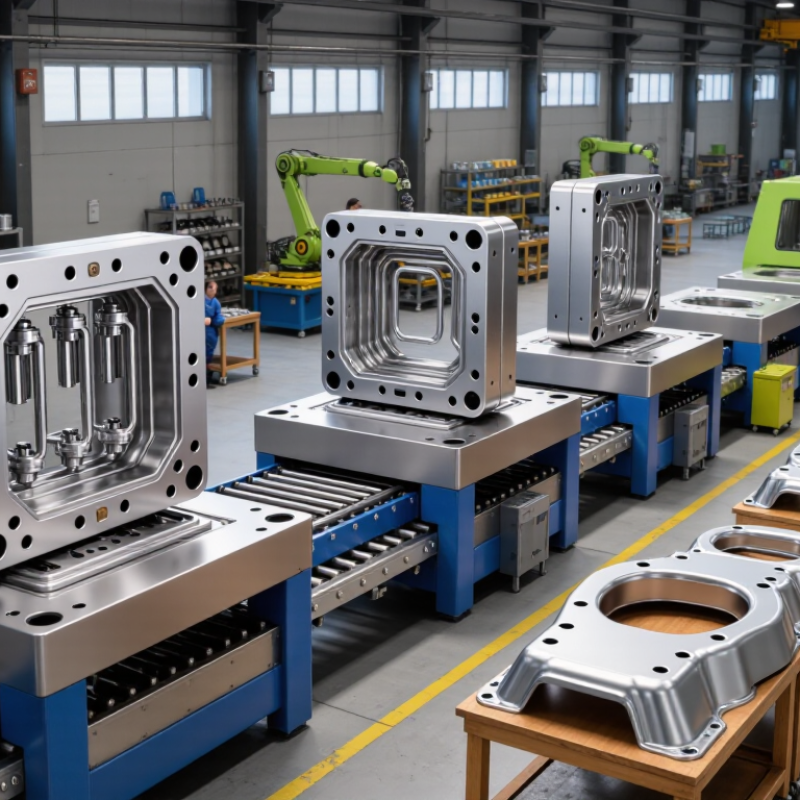
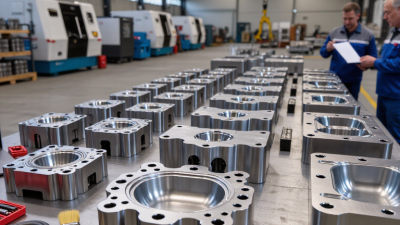
Agricultural machinery molds are shaped tools that form repeatable parts for tractors, harvesters, sprayers, and irrigation equipment. They commonly produce plastic covers, air ducts, control housings, fuel tanks, and protective guards. A mold contains a carefully designed cavity. Heated material enters this cavity, follows its contours, and cools into the required shape.

The process begins with a digital drawing and a review of the part’s working conditions. Engineers consider vibration, mud, moisture, sunlight, temperature, and chemical exposure.

During production, operators control injection pressure, material flow, cooling time, and release force. Small vents allow trapped air to escape. Ejector pins then remove the finished part without damaging its edges.

Tight measurements matter. A warped housing may cause misalignment during assembly.

From hands-on manufacturing experience, mold performance depends on more than appearance. Steel selection, surface treatment, cooling channels, and maintenance affect service life. A clean mold can produce consistent parts across thousands of cycles.

Still, no design is perfect immediately. Thin corners may cool unevenly, and complex ribs can create hidden stress. Trial runs reveal these weaknesses, sometimes requiring revised gates or thicker sections. This extra work feels slow, but it prevents repeated defects and expensive field repairs.
Which Agricultural Equipment Components Require Molded Parts?

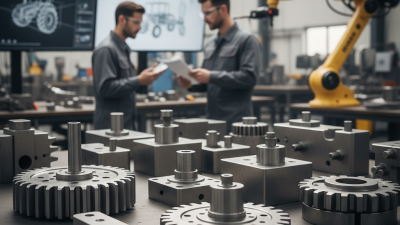
Agricultural equipment often works in dust, rain, vibration, and sudden temperature changes. Molded parts help manufacturers produce consistent components for these demanding conditions. Common examples include tractor dashboards, protective guards, seed-metering housings, fertilizer bins, irrigation fittings, and cable covers. Each part needs a different balance of strength, flexibility, and chemical resistance.

Seed meters require accurate molded surfaces because small dimensional errors can affect planting rates. Fertilizer bins need smooth interiors, so granules do not collect in corners. Protective guards must absorb impacts without cracking. UV-resistant materials also matter for covers and exterior panels that remain outdoors for years. In practical production, mold cooling and material flow often decide whether a part stays stable after removal. Small details matter.

Do not overlook seals and soft molded grips. They improve operator control and help prevent dust or moisture from entering sensitive areas. However, choosing a mold only for low initial cost can create warping, flash, or weak edges. That lesson is easy to miss. Designers should review wall thickness, draft angles, fastening points, and expected maintenance before tooling begins. A field test may reveal problems that drawings cannot show. Sometimes, a simpler molded shape performs better than a highly detailed one.

Why Choose Agricultural Machinery Molds for Your Business?

Agricultural equipment uses molded parts where low weight, corrosion resistance, dimensional consistency, and repeatable production are important. Common applications include protective covers, fluid-handling components, wear liners, guards, and operator-interface parts.

The chart shows representative continuous-use temperature values for polymer families commonly selected for molded agricultural machinery components. Actual performance depends on the resin grade, additives, wall thickness, loading, chemicals, ultraviolet exposure, and operating conditions.

How Do Machinery Molds Improve Production Efficiency and Product Quality?

Agricultural machinery molds help manufacturers produce strong, consistent parts at a controlled cost. They shape covers, handles, housings, guards, and other components with repeatable dimensions. This repeatability reduces fitting problems during assembly. It also limits material waste from rejected parts.

Well-designed molds improve production efficiency through shorter cycles and smoother material flow. Proper cooling channels can reduce waiting time between molding stages. Stable ejection systems help prevent scratches, cracks, and deformation. These details matter when equipment must survive dust, vibration, moisture, and seasonal fieldwork. Quality checks should include measurements, surface inspection, and trial assembly. A part may look acceptable but still fail under repeated load.

Mold performance depends on more than the original design. Material selection, machine settings, operator skill, and maintenance all influence results. In practice, early production estimates can be wrong. Small adjustments may be needed after testing real samples. That is not a weakness; it is useful evidence for refinement.

Tips: Use realistic product tolerances instead of unnecessarily tight ones. Check cooling balance before increasing machine speed. Keep venting areas clean and inspect wear regularly. Record defects with photos and measurements. A simple production log can reveal patterns that memory often misses. Also, test molded parts under working conditions, not only in a clean workshop.

Why Choose Agricultural Machinery Molds for Your Business? - How Do Machinery Molds Improve Production Efficiency and Product Quality?

Business Dimension Measurable Indicator Typical Engineering Range or Requirement How the Mold Improves Production Efficiency How the Mold Improves Product Quality Best-Suited Agricultural Applications
Production cycle control Cycle time Approximately 15–90 seconds for many injection-molded thermoplastic components, depending on part size, wall thickness, resin, and cooling design. Integrated cooling channels and balanced filling reduce unnecessary cooling, filling, and handling time. Stable cooling helps reduce warpage, sink marks, dimensional variation, and internal stress. Protective covers, housings, guards, instrument panels, and fluid-system components.
Dimensional consistency Part-to-part dimensional variation Controlled through mold accuracy, process capability, material shrinkage data, and temperature stability; the required tolerance should be defined on the engineering drawing. Repeatable cavities and guided mold movement reduce manual fitting and rework between production batches. Consistent dimensions support correct assembly of gears, shafts, bearings, seals, and fasteners. Transmission covers, brackets, housings, couplers, and mounted structural parts.
Material utilization Runner and scrap control Hot-runner systems can reduce cold-runner waste, while optimized blank layouts can improve sheet-metal utilization. Efficient gating, nesting, and blank layout reduce material consumption and production interruptions. Stable material flow reduces weld lines, short shots, burrs, and inconsistent filling. Injection-molded covers, stamped brackets, sheet-metal guards, and formed panels.
Surface quality Surface roughness and appearance Machined mold surfaces commonly use specified finishes such as approximately Ra 0.8–3.2 μm, with smoother or textured finishes selected by application. Defined polishing or texturing reduces secondary finishing and manual surface treatment. Uniform cavity surfaces produce consistent gloss, texture, release behavior, and visual appearance. Operator consoles, exterior panels, protective guards, and ergonomic handles.
Wear resistance Tool hardness and wear protection Pre-hardened mold steels are commonly supplied around 28–42 HRC; hardened tool steels may reach approximately 48–60 HRC, depending on grade and heat treatment. Wear-resistant materials and replaceable inserts extend service intervals and reduce unexpected downtime. Stable cavity geometry maintains part dimensions and edge definition throughout repeated production. High-volume parts, abrasive-filled plastics, stamping dies, and components exposed to dirt or mineral particles.
Assembly efficiency Integrated features per part Molds can combine mounting bosses, ribs, clips, locating features, and cable-management details into one molded component where design rules permit. Fewer separate components and fastening operations shorten assembly time and simplify inventory management. Integrated features improve alignment and reduce loose fasteners, misassembly, and vibration-related movement. Electrical enclosures, sensor covers, control panels, and machine guards.
Structural performance Ribs, bosses, and wall-thickness control Uniform wall design and properly sized reinforcement features help balance strength, weight, cooling, and material use. Lightweight molded structures can reduce material usage and handling weight without adding multiple reinforcement parts. Controlled geometry improves stiffness, impact resistance, load distribution, and resistance to deformation. Fan shrouds, battery covers, engine covers, guards, and support housings.
Repeatability across batches Process repeatability Achieved through consistent cavity geometry, controlled mold temperature, stable clamping, and documented process parameters. Standardized tooling makes production easier to transfer between shifts and approved manufacturing lines. Reduces variation in fit, appearance, weight, and functional performance from batch to batch. Replacement parts, service components, seasonal production, and export-oriented product lines.
Maintenance and downtime Serviceability Replaceable wear inserts, accessible cooling circuits, standardized fasteners, and documented maintenance intervals improve maintainability. Faster cleaning, inspection, and repair reduces unplanned stoppages and extends tooling availability. Maintained cavity surfaces and vents help prevent flash, burn marks, contamination, and dimensional drift. High-utilization production molds, stamping tools, die-casting tools, and seasonal agricultural equipment parts.
Total production cost Cost per acceptable part Primarily influenced by tooling cost, production volume, cycle time, material use, labor, maintenance, and scrap rate. Although initial tooling investment is higher than simple fabrication, repeatable molds can lower unit cost at medium and high volumes. Lower rework and rejection rates improve the proportion of parts that meet functional and cosmetic requirements. Standardized agricultural machinery components produced in recurring or high volumes.

Note: The ranges shown are general engineering references rather than guaranteed specifications. Actual performance depends on the selected molding process, material, part geometry, mold steel, machine settings, cooling design, inspection method, and production volume.

What Business Benefits Come From Using Agricultural Machinery Molds?

Agricultural machinery molds can turn repeated production into a controlled, measurable process. A well-engineered mold helps manufacturers produce guards, housings, panels, and other parts with stable dimensions. That consistency reduces fitting problems during assembly and limits material waste from rejected pieces. It can also shorten cycle times when cooling channels, draft angles, and ejection systems suit the material. In practice, this means fewer interruptions on a busy production floor. Small gains matter. A few seconds saved per part can improve annual output. Molded components may also be lighter than fabricated alternatives, helping equipment makers manage fuel use and handling demands. Results still depend on maintenance, operator training, and material selection.

The financial benefit becomes clearer when a company compares total production cost, not only the mold price. Reusable tooling can support larger production runs, predictable labor planning, and steadier delivery schedules. It may also simplify quality checks because critical dimensions remain consistent between batches. Experienced teams usually test prototypes before approving full-scale tooling. Early samples can expose warping, weak ribs, or difficult release points. That stage costs time, but it prevents more expensive corrections later. No mold is perfect. Wear eventually appears around gates, cavities, and moving inserts. Scheduled inspections and documented repairs protect reliability. Businesses should review production volume, part complexity, and service conditions before investing. A cheaper mold may become costly when downtime and replacement parts are included.

How Should Businesses Select the Right Agricultural Machinery Mold?

Choosing an agricultural machinery mold starts with the machine’s real workload, not its advertised cavity count. The OECD-FAO Agricultural Outlook 2024–2033 projects global agricultural production to grow about 1.1% annually. That growth increases pressure on reliable, repeatable components. A suitable mold should match the part’s material, dimensions, production volume, and field conditions. Ask about batch size, cycle targets, surface finish, and repair access. Do not choose by price alone. A low quote can become expensive.

For abrasive environments, select mold steel with suitable wear resistance and heat treatment. For complex housings, examine draft angles, parting lines, and ejection force carefully. Cooling channels should remove heat evenly, especially around thick bosses and corners. Poor cooling can leave warping, sink marks, or long cycle times. Keep maintenance practical. Operators need reachable inserts, standard fasteners, and clear inspection points. The best specification may still be wrong if the workshop cannot maintain it.

FAO’s The State of Food and Agriculture 2022 links agricultural automation with improved timeliness and labor efficiency, but stresses that suitability and access matter. Request dimensional reports, material certificates, and sample parts before production approval. Review results under real operating conditions, including dust, vibration, and repeated loading. A short pilot run often reveals problems that drawings miss. Mold selection is rarely perfect. Revise the design when field evidence challenges the original assumptions.